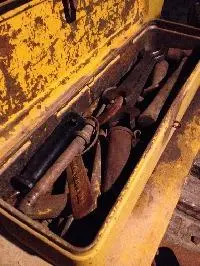

Forgive me for hijacking JM's thread - Cultivation (discing) vs non cultivation (Mowing) here in the Sacramento Valley has proven controversial in some circles. I grew up discing, then when Sprinkler irrigation came about, Dad transitioned to mowing. Walnut orchard was getting old, and non cultivation did improve the orchard (trees were healthier, better crop), the important feeder roots in the top 18" of soil were no longer cut by cultivation practices. ( one could take a shovel and hit roots within the first six inches or less, not so when discing was the normal) Fuel use was less, time spent for harvest reduced, dust and the associated problems were greatly reduced. Sprinkler irrigation was a huge improvement over the flood or furrow process, less water and it was not sent to the drain. Labor was reduced too. Overall, a substantial cost savings and better health of the orchards. -- cts
Looks like fun!!
Neil what a can of worms this could turn this into. As simple as growing a tree is, under irrigation vs dryland in a Mediterranean climate (no rain during the main growing season ) is VERY DIFFERENT. I have no idea of how the 2 would compare with rainfall in the main growing season. As I have lived my whole life in central California. Since I know you have been to Best of the West Caterpillar show you have seen very large oaks that do very well without a lot of rain. At the end of our rain season out here the ground starts drying. Capillary action keeps bring water up out of the deeper levels in the soil. With tillage you can break the capillary action. It is not a perfect way but it helps. But tillage in and of itself will expose soil to the air to dry it out. In my option perfect tillage would be 3 to 4 inches deep. The soil would have no particle much bigger than a grain of sand. From 1979 until 2015 I grew at least 100 acres of safflower every year. All but 2 or 3 years it got not one drop of rain on it from the seed going in the ground (April to May )until harvest (mid September to October). In soil science books of old they us to call bare tilled ground as having "dust mulch" to stop capillary water loss. With the advent of modern no till farming nobody wants to admit this ever existed in many circles.
Some soil is just easier to till and get it worked to what ever consistency you want. But it takes being ready to go when the soil says. You cannot get in a hurry and work soil too wet but to dry is even worse. In my humble option as useful as disc harrows are they are terrible at helping save moisture at the end of the rainy season here. One of the big things is figuring when the rain is over. How ever you figure that out, at that point I wanted to only use a field cultivator with a harrow/drag behind it. The cultivator not turning the soil over the way a disc does you loose much less moisture out of the seedbed making germination of seed much more successful. Thankfully I had good luck most years, but I remember one really poor year. I even have success growing sweet corn without it getting a drop of rain on it. But not enough production to be a money making crop. More novelty to just say I can. Corn seed takes more moisture to get germination than safflower. Safflower also has a tape root that goes deeper looking for water. As well a leaf that doesn't loose as much water as corn does.
But back to you original question about trees. Here with the walnuts mowing is a poor choice without irrigation. Because natures first priority is to keep the dirt covered with something growing on it. Every time you mow the top off nature pushes the plant to make an effort to produce a seed. So the plant does it's best to suck up a bit more water out of the soil to make this happen. It may not be that much water but it is enough to make a difference to the tree. With discing it is more a one and done. With mowing most start to soon maybe. But they always had to mow 3 or more times, with the plant making the effort to grow another seed head. Maybe if the owner could of had patients and been able to look at a mass of weeds until they dried he would of been more successful.
I have sprayed enough soil sterilizers and glyphosate to see that is a very viable way to save moisture in the soil as well. There were a few that were just experimenting with this here, until the organic market for walnuts exploded . So it was never fully tried, I expect it would work much better than mowing. With irrigation water available mowing is effective way of growing tree. But irrigation is not cheap.
Another observation is that ground that was mowed with a flail mower the top 2 inches had much more compaction than unmowed ground. I don't know if this was because how the mower was used , or if a rotary mower would been better. So this orchard did not have as much water infiltration as it might of had. So I sure don't want to say flail mowing will cause compaction in all cases. But was very noticeable in this one case.
Very interesting, thanks for posting that Ray. It's quite intricate isn't it.
Ray54 - Dry land vs irrigated lands presents very different situations. Flail mowing - most of the flails had a roller on the back side which could account for the compaction as it did carry some of the weight of the machine. Even the big "bat wing" rotary mowers carry an amount of weight on the wheels and that does not count the weight of the pulling tractor. In my opinion - the biggest issue working dirt whether mowing or discing, is getting on the ground when it is too wet. One either builds bricks from the disc or compacts the ground and in some cases leaving ruts. Either is a no win for soil health. Years ago, it was practice to fallow one piece of ground, keep it tilled so no vegetation grew and then plant the following year. That was done to attempt to save what moisture was available. This was Dry Land Farming. Soils vary from one part of a parcel to another and in some areas this is crucial to optimum timing. No one answer for all situations. Thanks for sharing your experiences and insight. - cts
I dryland farmed over 40 years in the hills of the San Mateo county Coast. My main crop was English Peas which are hand picked for eastern shipment or local fresh market. Sometimes barley. Both crops would be grown without rainfall. Any rain would screw things up and require cultivation.
The way I learned it the offset disc is not a good tool for dryland farming. You loose too much moisture and under many conditions creates a hardpan. I would moldboard plow in the early rainfall season so water could soak in. Work down and keep weeds from growing with a spike tooth harrow, before planting work up the dust mulch with a spring tooth with a harrow behind. Sometimes a ring roller would come in to play to "seal the ground" after planting.
All this can be accomplished with an offset disc but the timing has to be perfect.


Our channel highlights machines from the earliest Holt and Best track-type tractors, equipment from the start of Caterpillar in 1925, up to units built in the mid-1960s.
Chapter Nineteen
| 5875 South Gippsland Hwy, Nyora, VictoriaChapter Nineteen
| 80 Chapman Rd, Silvan, VictoriaChapter Thirty
| Booleroo Centre, 54 Arthur St, Booleroo Centre SA 5482, AustraliaChapter Nineteen
| Wheatlands Warracknabeal Agricultural Museum 34 Henty Highway, Warracknabeal 3393
Antique Caterpillar
Machinery Owners Club
1115 Madison St NE # 1117
Salem, OR 97301
Terms & Privacy
Website developed by
AdCo
"I became a member recently because the wealth of knowledge here is priceless."
-Chris R