
.
Whatever you decide, as an interim measure a good magnet either inside or outside the tank might keep most of the rust from going down the pipe.
We have been having good luck with tumbling tanks with small pieces of chain, ball bearings, and nuts inside to break up the loose rust then rinsing the tank out with water and then acetone. Sometimes several repetitions of each step. Solder or braze the big holes and then we then use a product called Red Kote to line it. It has worked well for us so far on many antique tractor tanks and I just recently lined my D6 pony tank with it.
Two compounds I know the name of are Red Kote and POR-15, but there’s probably others. I think it’s best to line the pony tanks while you have them clean. I’ve had to do some extensive brazing to save one that I should have cleaned and lined a long time ago. I’ve redone one pony tank after 10 years and it worked just fine the second time. Maybe I didn’t get it cleaned well enough the first time.
Which ever product you use the biggest cause for liner failure in any of them is failure to follow directions to the letter.
I have used POR15 products with success on several tanks and so far all is well. Their cleaners, as I am sure some others, are water based which made sense to me after all the idea is to clean petroleum products out so why introduce more.
Good luck...….Bill
I second Bill's comment - follow the instructions to the letter for the tank liners
CR: I tried household lye to clean my D2 tank and it worked great. Bare metal inside now. It may seem unorthodox to some, but it was fast, effective and inexpensive.
Drilling the inlet of the fuel valve and installing a remnant of copper fuel line or even Synflex air line about an inch helps a lot too. Any heavy stuff in your fuel should settle to the bottom, and not get drawn into the filter. Cheap and easy.
[quote="juiceman"]CR: I tried household lye to clean my D2 tank and it worked great. Bare metal inside now. It may seem unorthodox to some, but it was fast, effective and inexpensive.
Drilling the inlet of the fuel valve and installing a remnant of copper fuel line or even Synflex air line about an inch helps a lot too. Any heavy stuff in your fuel should settle to the bottom, and not get drawn into the filter. Cheap and easy.[/quote]
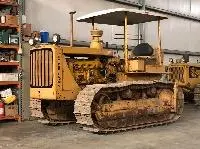
That's a very good suggestion JM, those old pony motor tanks seem to attract rust and after a few days working a old diesel Cat I've found each morning when I go to start the pony motor the gas line inlet is choked with rusty dust.
I just gave 2 of those pony gas tanks a good soak in my citric acid bath for a week followed by a good rinse, then a Redkote treatment, first time I've used it, seems to set like concrete that stuff, it will never come off if done properly.


Our channel highlights machines from the earliest Holt and Best track-type tractors, equipment from the start of Caterpillar in 1925, up to units built in the mid-1960s.
Antique Caterpillar
Machinery Owners Club
1115 Madison St NE # 1117
Salem, OR 97301
Terms & Privacy
Website developed by
AdCo
"I also joined a year ago. had been on here a couple of times as a non-member and found the info very helpful so I got a one year subscription (not very expensive at all) to try it out. I really like all the resources on here so I just got a three year. I think its a very small price for what you can get out of this site."
-Jason N