

Manifolds are very rough, and as you can see in the pictures you posted, the carbon buildup in the outer "heat riser" portion of the intake that caused so many problems. The Heat Riser was a problem but thought to be necessary due to the fuels used at the time. RE: Serial Numbers -- those on the transmission cover and fenders are only accurate to the machine at time of delivery. I am attaching a picture of two Thirty's, the one I am on was originally a "cruiser", converted to "tailseat" by the owner that gifted it to me. I knew the history of this Thirty and it is now back with the original owners children and grandkids. The Thirty Dad built from a couple of different machines and parts gathered, it is shown as a Wide Gauge, Cat 35 rails/pads, RD-4 equalizer spring, and the machine it was rescued from was a "cruiser". I hope this sheds some light on the issue of using Serial numbers on transmission case and fenders. If I recall correctly, there is a number stamped on the engine crankcase but that only applies to the crankcase. Many of the Wide Gauge Thirty's were used for running gear for the early home built self propelled combines here in the central valley of California - Rice Machines. (The Thirty I am seated on was always a working tractor until Dad sold the orchard and relocated. I have many memories of that tractor in the orchards, thus I can attest to the "catapult" and the starting procedures, do not under estimate the dangers!)
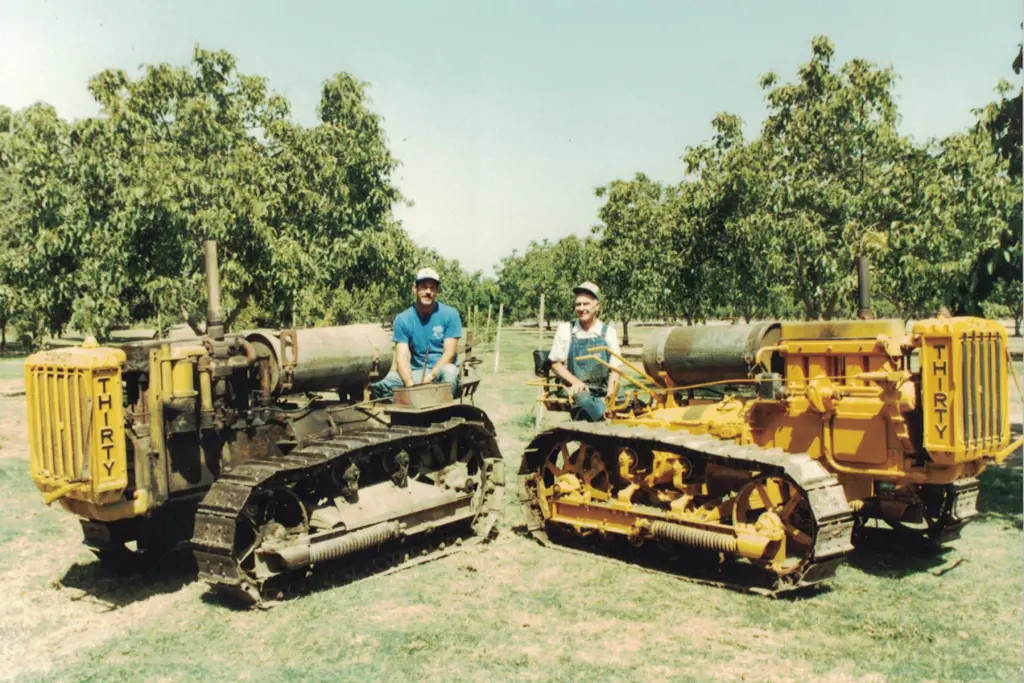
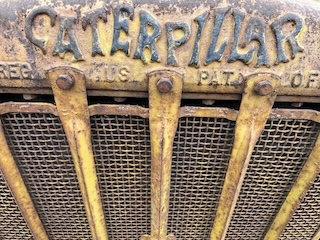
Manifolds are very rough, and as you can see in the pictures you posted, the carbon buildup in the outer "heat riser" portion of the intake that caused so many problems. The Heat Riser was a problem but thought to be necessary due to the fuels used at the time. RE: Serial Numbers -- those on the transmission cover and fenders are only accurate to the machine at time of delivery. I am attaching a picture of two Thirty's, the one I am on was originally a "cruiser", converted to "tailseat" by the owner that gifted it to me. I knew the history of this Thirty and it is now back with the original owners children and grandkids. The Thirty Dad built from a couple of different machines and parts gathered, it is shown as a Wide Gauge, Cat 35 rails/pads, RD-4 equalizer spring, and the machine it was rescued from was a "cruiser". I hope this sheds some light on the issue of using Serial numbers on transmission case and fenders. If I recall correctly, there is a number stamped on the engine crankcase but that only applies to the crankcase. Many of the Wide Gauge Thirty's were used for running gear for the early home built self propelled combines here in the central valley of California - Rice Machines. (The Thirty I am seated on was always a working tractor until Dad sold the orchard and relocated. I have many memories of that tractor in the orchards, thus I can attest to the "catapult" and the starting procedures, do not under estimate the dangers!)
What a great picture of you and Dad!
On the serial numbers, if I can find it stamped on the crankcase, I can at least verify all of the major components are original to each other. After doing some research on the forum, I have checked all of the places suggested to others with Thirty's in the past. The only other place left to check is behind the #4 cylinder on top of the "bellhousing". Someone had posted a picture of where they found theirs and it was under the fuel tank bracket on a tail seat model. I may also be able to decipher the date codes. If it doesn't match it may hurt the value some but I will still be happy to have it. I like the farm tractor purpose of these models and plan to take it to some plow days. I will eventually pick up either a set of plows, discs or a subsoiler.
The starting procedure is different from other tractors. I was always taught to stand in front of the tractor, tuck your thumb under when you grab the crank handle and pull up. This will naturally keep your head out of the way if it kicks back. NEVER stand to the side just in case the handle comes flying off and takes you out. This doesn't appear to be an issue with these old Caterpillars.
Cranking -- My right hand was always on the air cleaner intake, left on the crank. NEVER EVER grasp a crank handle with your thumb wrapped around the handle, ALWAYS thumb tucked against your index finger. On the Thirty - I used my right hip to help push the crank into the front of the crankshaft, then stepped back as I pulled the crank toward me. This was taught to me and drilled as the way to crank machines, from Model T Fords, Fordson F's, all the various models of Caterpillar, etc. Pushing down on a crank or bar invites injury or worse! Pull stroke puts you out of the danger as much as possible.
Your Thirty is tempting to start if it is free, has oil and turns over, mag has spark? Easy to pull the valve cover, check that the valve train is working and then while open, get #1 on TDC and check the Mag timing. I would suggest you pull the spark plugs and squirt some oil in the cylinders, at least that will help keep things loose. See if it will fire on priming fuel only, no need to put gas to the carburetor or fill the radiator with water. You might have a pleasant surprise! Carburetor will have a cork float that is coated with "shelac" and the modern fuels won't agree with that coating, so make sure you drain the fuel from carburetor every time! Some parts for the Thirty are going to be tough to come by, many were totally discontinued by Caterpillar pre-1970s. - ENJOY your machine! Keep us posted on progress and photos are aways welcome! I would suggest you become a member of ACMOC - a great team of owners/operators/enthusiast along with the benefits of the library, etc. - cts


Our channel highlights machines from the earliest Holt and Best track-type tractors, equipment from the start of Caterpillar in 1925, up to units built in the mid-1960s.
Chapter Nineteen
| 1234 Carngham - Lake Goldsmith Road Lake Goldsmith VIC 3373Chapter Two
| Folds Farm, Godshillwood, Fordingbridge, Hampshire, SP6 2LU
Antique Caterpillar
Machinery Owners Club
1115 Madison St NE # 1117
Salem, OR 97301
Terms & Privacy
Website developed by
AdCo
"I also joined a year ago. had been on here a couple of times as a non-member and found the info very helpful so I got a one year subscription (not very expensive at all) to try it out. I really like all the resources on here so I just got a three year. I think its a very small price for what you can get out of this site."
-Jason N