

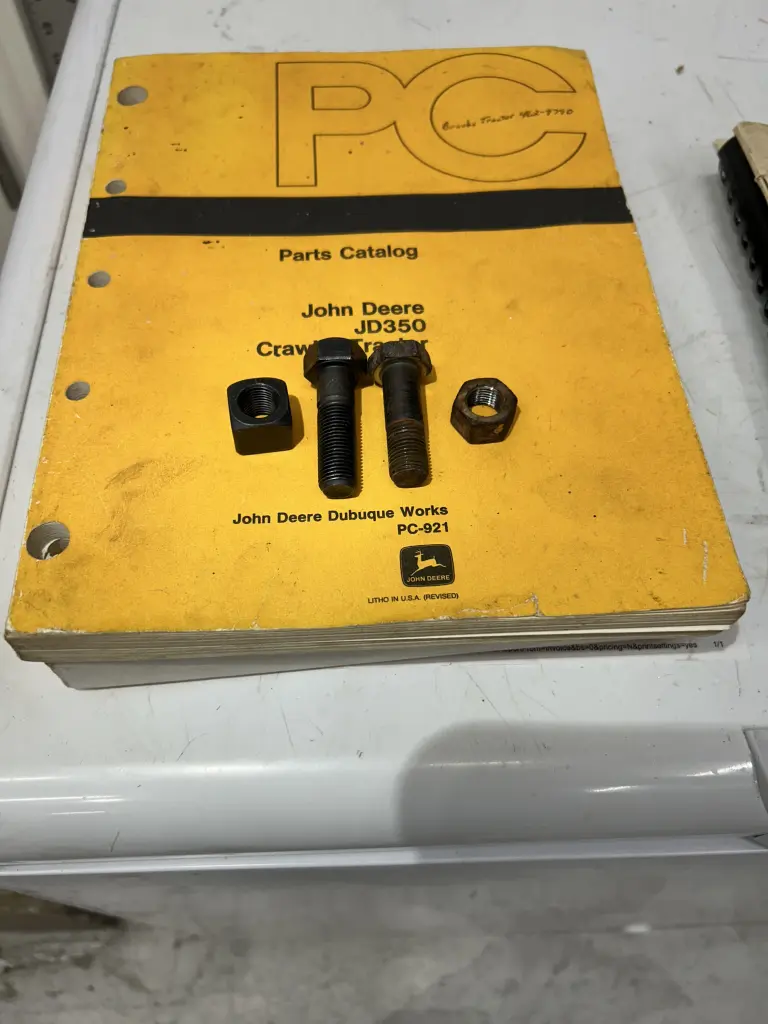
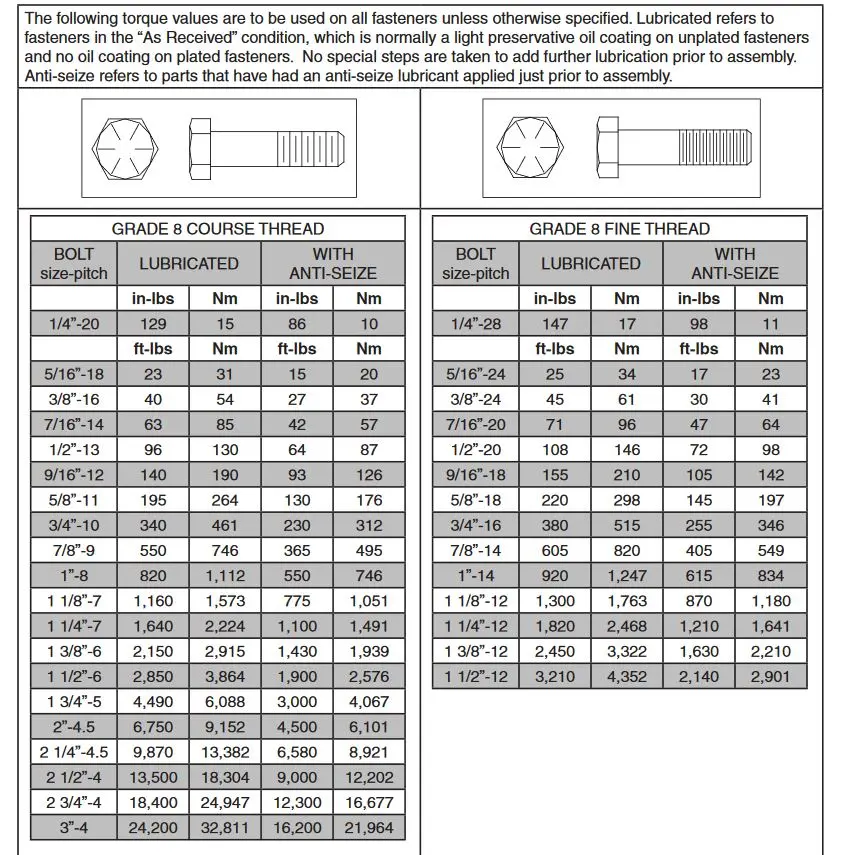
I'm installing new single grouser dozer pads on a non-Caterpillar machine (John Deere 350 - 1967 model) and I have 1/2" - 20 (fine thread) track bolts from ITR.
ITR directions say to torque them dry to 140 ft/lbs or torque to 48 ft lbs and then 1/3 turn.
The folks on the heavy equipment forum are big fans of using anti-seize on track bolts. If I go this route, I should probably only torque to about 110 ft/lbs because you need less torque when using anti-seize.
I called ITR and the guy I spoke with didn't have any info on whether or not to use anti-seize.
I know I'm probably overthinking this, but do y'all have any recommendations?
Thanks,
Scott
In about 1976, I was the track press operator for the Caterpillar Dealership. Never did I use anti'sieze on any track bolts. Torque was what the 1" air gun would put out, never had any issues with loose bolts. Taking the old ones out sometimes required the Oxy-Acet "wrench" with flat scarfing tip, one had to be very careful not to "gouge" the track shoe as if that occurred the bolts would never stay tight again. i can not imagine having to use a torque wrench on each bolt when turning pins and bushings. -- CTS
In about 1976, I was the track press operator for the Caterpillar Dealership. Never did I use anti'sieze on any track bolts. Torque was what the 1" air gun would put out, never had any issues with loose bolts. Taking the old ones out sometimes required the Oxy-Acet "wrench" with flat scarfing tip, one had to be very careful not to "gouge" the track shoe as if that occurred the bolts would never stay tight again. i can not imagine having to use a torque wrench on each bolt when turning pins and bushings. -- CTS
Thanks for the info. I plan to torque them all individually, and I'm ok with that. It's only 288 iterations (!).
I have only removed a few pads at this point and none of them put up much of a fight, but I do have a blue-tip wrench and I'm not afraid to use it!
Scott
Hi, bulletpruf.
I have no idea how it might affect the torque settings but a couple of companies for whom I have worked in the past swore by stockholm tar as both anti-seize and 'locktite' in one package. The first place I saw it used was on track roller mounting bolts onna Hanomag D600 dozer.
As stated above, I have zero technical info on it so it is strictly a 'suck-it-n-see' -'supta-u' proposition.
Just my 0.02.
You have a wonderful day. Best wishes. Deas Plant.
Cat calls for anti seize or thread lube and use the torque turn method.
Your bolts should have a light coat of oil on them.
I just dip the bolts in oil and let then dip off not as messy.
Make sure you put the square nuts on the right way.
Only an amateur would use a 1" impact wrench on a 1/2" bolt guaranteed to cause loose bolts.
Bob
Hi, bulletpruf.
I have no idea how it might affect the torque settings but a couple of companies for whom I have worked in the past swore by stockholm tar as both anti-seize and 'locktite' in one package. The first place I saw it used was on track roller mounting bolts onna Hanomag D600 dozer.
As stated above, I have zero technical info on it so it is strictly a 'suck-it-n-see' -'supta-u' proposition.
Just my 0.02.
Hi Deas Plant - I am intrigued by the anti-seize and loctite combination in Stockholm tar; maybe you mentioned it in an earlier thread? But since I don't know how it affects torque values, so I won't be using it on the track bolts.
Thanks,
Scott
Cat calls for anti seize or thread lube and use the torque turn method.
Your bolts should have a light coat of oil on them.
I just dip the bolts in oil and let then dip off not as messy.
Make sure you put the square nuts on the right way.
Only an amateur would use a 1" impact wrench on a 1/2" bolt guaranteed to cause loose bolts.
Bob
Yes, I do think the bolts have a very light coat of oil. I'm inclined to install them as-is, per the manufacturer's (ITR) specs.
Thanks for the input.
Scott
I'm a big fan of following the manufacturer's directions - that said, if you intend on undoing the bolts at some point, then some lubricant could be in order and if they're already coated, then that's probably good enough
Recommend you use the torque turn method works much better than just torquing.
the square nut in your picture shows the bottom of the nut when installed, away from the bolthead so the bottom of the nut in the picture goes toward the rail.
Bob
Recommend you use the torque turn method works much better than just torquing.
the square nut in your picture shows the bottom of the nut when installed, away from the bolthead so the bottom of the nut in the picture goes toward the rail.
Bob
It's not a great picture, but just to clarify, the nut is flat on one side and rounded on the other. The flat side goes towards the rail/contacts the rail, correct?


Our channel highlights machines from the earliest Holt and Best track-type tractors, equipment from the start of Caterpillar in 1925, up to units built in the mid-1960s.
Antique Caterpillar
Machinery Owners Club
1115 Madison St NE # 1117
Salem, OR 97301
Terms & Privacy
Website developed by
AdCo
"I became a member recently because the wealth of knowledge here is priceless."
-Chris R