
What does everyone think of this setup? I put about 2000 psi on the 60 ton cylinder and it creates a lot of deflection in the rim. Am I grabbing it too far out from the center? Should I be grabbing the webbing in between the spokes? I don't want to ruin the rim. Has anyone ever ruined a sprocket grabbing it like this?
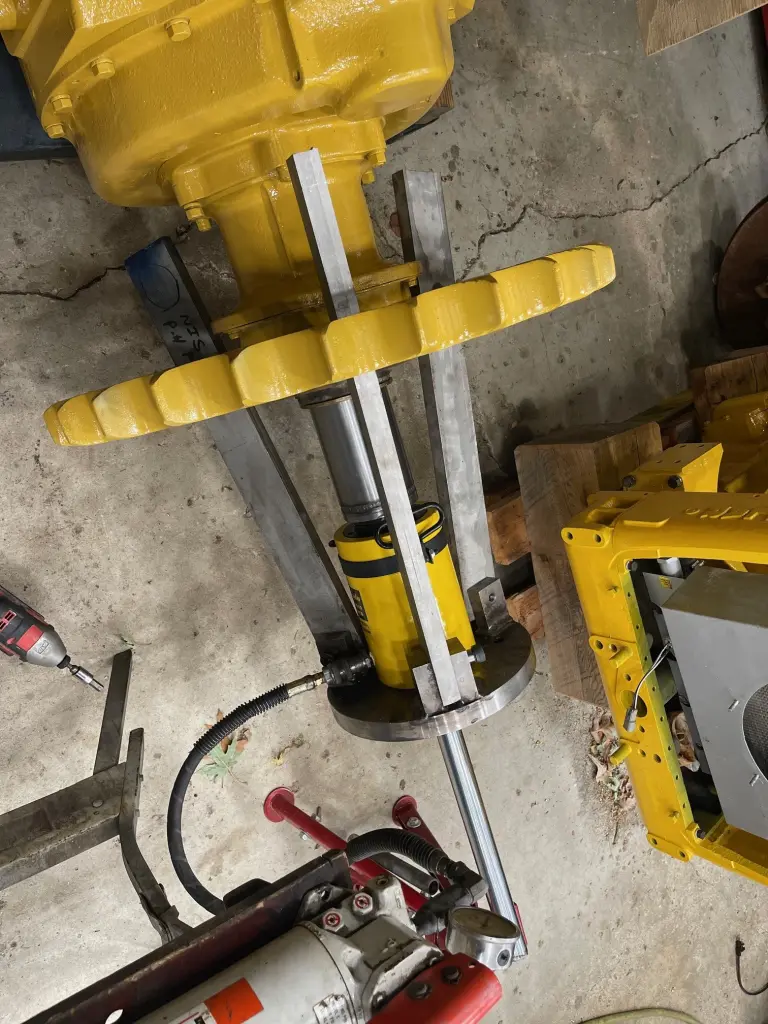
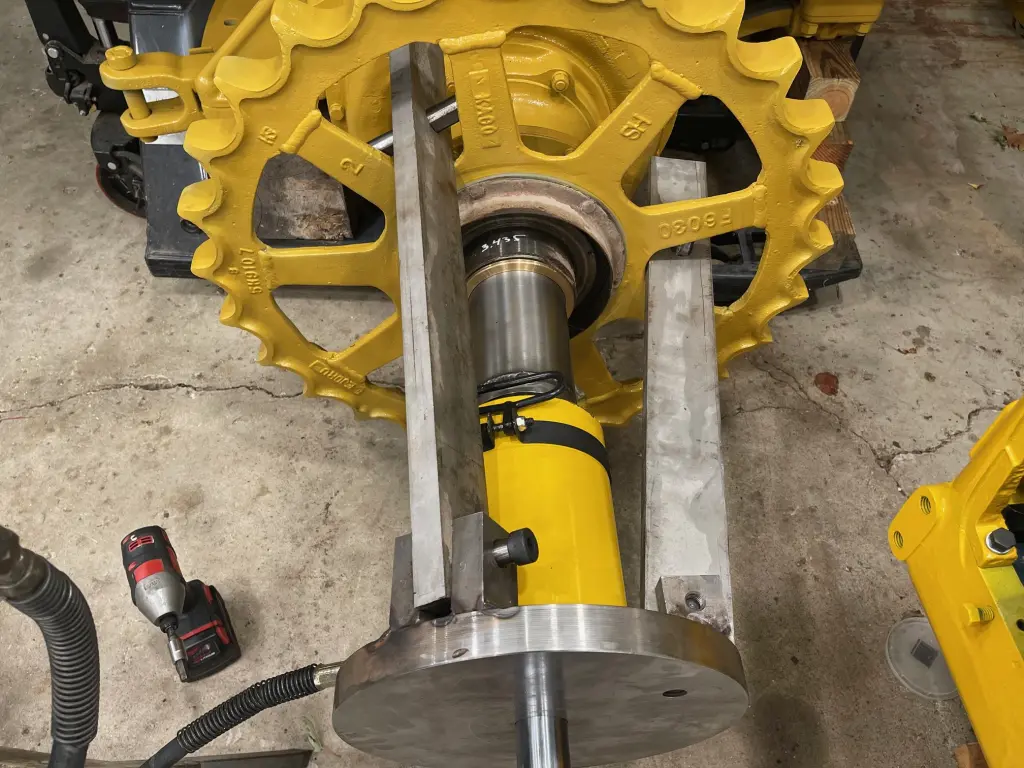
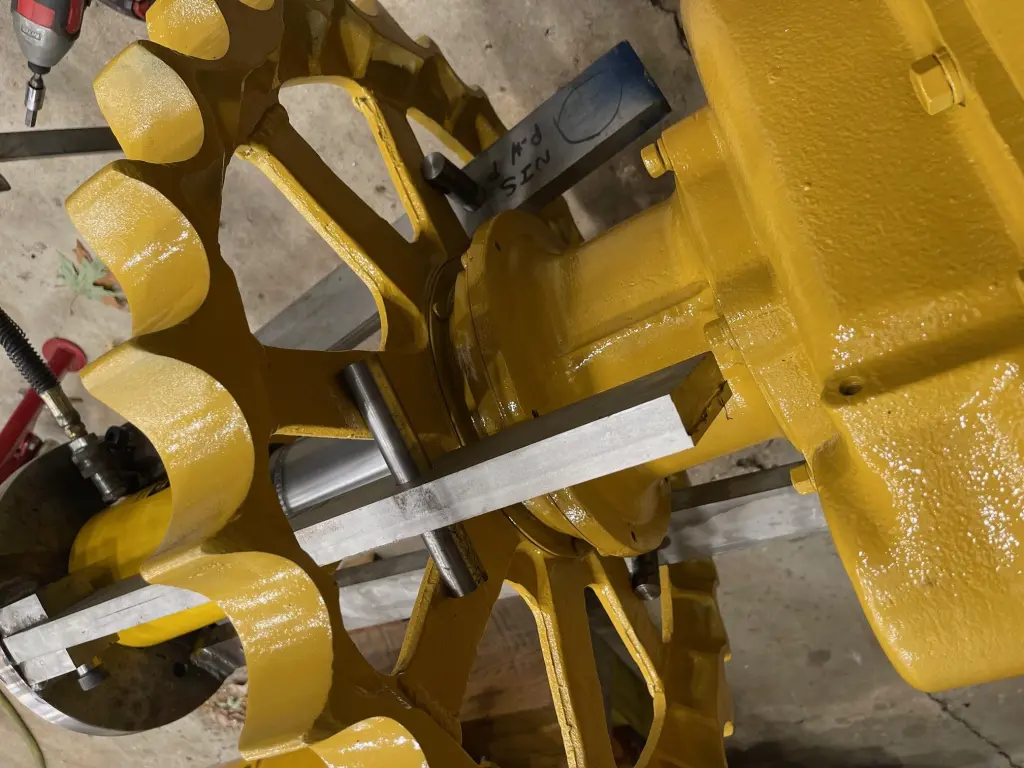
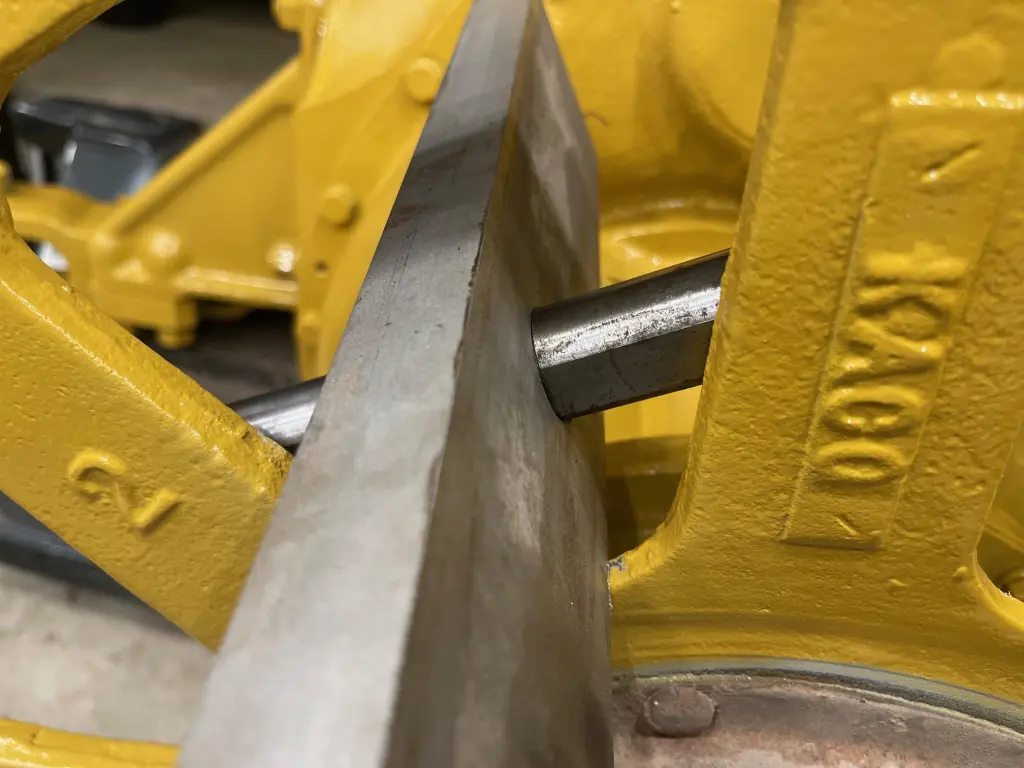
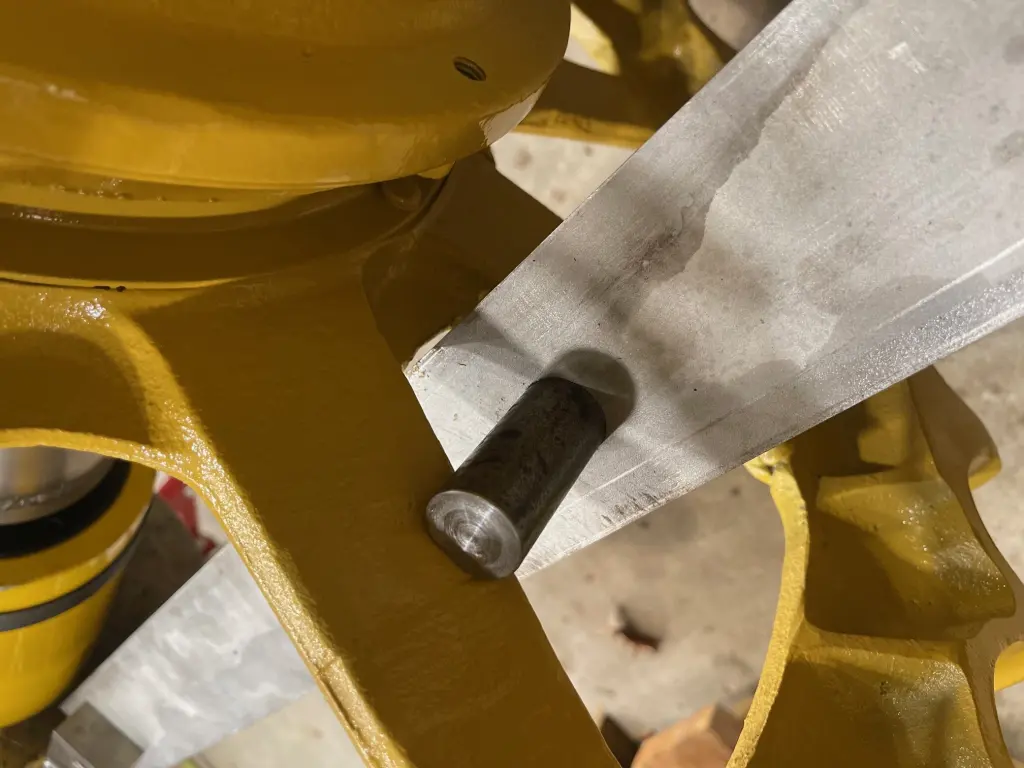
One thing I do not see - the nut on the end of the deadshaft. It should be there, loosened a few turns. The nut is the only thing that will stop those pieces when it breaks loose! When they do "pop" it is with tremendous kinetic energy! Of course, anytime you are pulling something, the closer to the shaft you can place the puller, the better. I would be concerned about the length of the rod in your puller, why not cover the whole spoke? What is the material in the puller and rods, is it properly heat treated, annealed and tested for those TONAGES of pressure.
Unless I am not seeing the relative distances between the power supply and the cylinder, you are way too close! The unit by Caterpillar that was in use by us in the Cat shop in the early 1970's, hoses were long enough for the operator to be on the other side of the machine. No bystanders on the puller side - when they do let go and it sometimes was with a BIG BANG - you knew you did not want to be anywhere close! --You also have to think of the methods of putting the sprocket back with the required tension. --- CTS
An addendum - 2000 PSI in your quote is only one part of the equation necessary -- One must know the area of the piston that the 2000 PSI is applied to before you can even think about the tonnage being applied to the work. Time to dig out the mathematics and do some calculations. Only when that is done and the strength of your "puller" is known can you safely and properly attempt to pull the sprocket. -- cts
In the 2nd picture the bronze washer will stop the sprocket from flying off. The steel round piece behind the bronze washer is threaded onto the shaft that the sprocket is mounted on (just like the cat tooling). The puller arms are 304 hot rolled stainless 1x3. AT 30 KSI they should support 135 tons. I should only need 30-40 to remove these sprockets.
Just watched Sasquatch253 pull one on U tube last night. A great video worth the watch and very detailed explaining everything as he solid it. I believe you can find links to all his videos in the member area.
i would have the arms cut like hooks so you can get right down close the hub rather than loading the spokes sideways the way your doing it is a good way to snap the sprocket you loading it where its not made to be in a direction its not supposed to take force.
rough guess that looks like it would be a 5 or 6inch piston dia.
pi times radius squared to get area in inches then multipy by pressure in psi gives pounds of force applied
2.5sq times pi is 19.6349
times 2000 equals 39,269.8 pounds. so divide that by 0.0005 is 19.63 ton. so just under 18 metric tonnes
remember that ram is rated at 10000 psi input pressure.
nearly 20 ton is still a lot of force.
"i reject your reality and substitute my own" - adam savage. i suspect my final words maybe "well shit, that didnt work"
instead of perfection some times we just have to accept practicality
That cylinder if it is indeed rated at 60ton would only have a piston diameter of 4". My 100ton cylinder only has a bore of 5.13". Given a 60ton cylinder pumped to 2000psi, which is a fifth of capacity, the force is only 12ton which is nowhere near enough to pull a sprocket off. My 955K took 70-80 ton before it let go and I was using a 100ton cylinder.
I would like to say good input from all here, great club support !!
Alex- any updates on your progress ? - cts
Hi, Alexjfrench.
LOTTTZA good advice in the replies here. The closer to the hub you can apply the pulling force, the better.
BUTTTT, here izza link to a You Tube video of a man who has some experience in the field removing a sprocket from an RD4:
https://www.youtube.com/watch?v=i_nvFtVOQYs&t=14s
That said, CTS hazza VALID point about getting WELL away from the sprocket itself when you are pulling it. You are gonna be building up a fair bit of force in the process and you DON'T want to be in the 'firing line' when it lets go. For that same reason, it izza good idea to set your puller up with either the retainer nut or, better yet, the correct puller adapter nut screwed on to the shaft.
Just my 0.02.
You have a wonderful day. Best wishes. Deas Plant.
I'm a bit late to the party here, but I see Deas already provided a link to one of the sprocket pulling videos that first came to my mind so he saved me a little bit of work - great minds must think alike lol!
But yes you do want to grab as close down to the root of the sprocket spokes as possible, otherwise they will crack. I've been using this 3-jaw puller on my 30-ton hollow ram with mixed success to pull Diesel Forty/RD-6 sprockets, it grabs right down around the hub portion which is good, but likes to fly off when the sprocket pops loose because there's nothing to keep it on the sprocket like the cross-bars on the original Cat setup so I rely heavily on those straps -
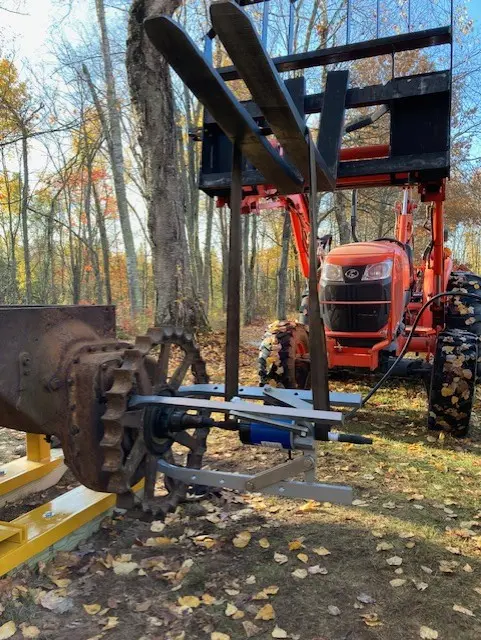
It's worked so far on the roughest parts tractor I have, but I'm sure that nothing was properly pressed back together during its last "repairs" and it's still taken everything that this 30-ton setup can do. I have a similar 3-jaw puller on order to fit my larger 50-ton ram, which I will be switching to if it ever shows up - for the last 6 weeks and they've been telling me it's a "couple weeks out"...


Our channel highlights machines from the earliest Holt and Best track-type tractors, equipment from the start of Caterpillar in 1925, up to units built in the mid-1960s.
Antique Caterpillar
Machinery Owners Club
1115 Madison St NE # 1117
Salem, OR 97301
Terms & Privacy
Website developed by
AdCo
"I also joined a year ago. had been on here a couple of times as a non-member and found the info very helpful so I got a one year subscription (not very expensive at all) to try it out. I really like all the resources on here so I just got a three year. I think its a very small price for what you can get out of this site."
-Jason N