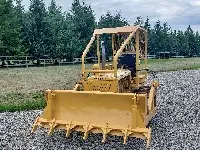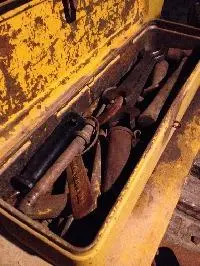

Can't remember about D2's but for D4's some models had the s/n stamped along the sump flange.
The power unit I picked up last spring has it stamped on the bottom block edge(sump flange) on the left side about a third of the way back from the front. Had to do some paint scraping to read it.
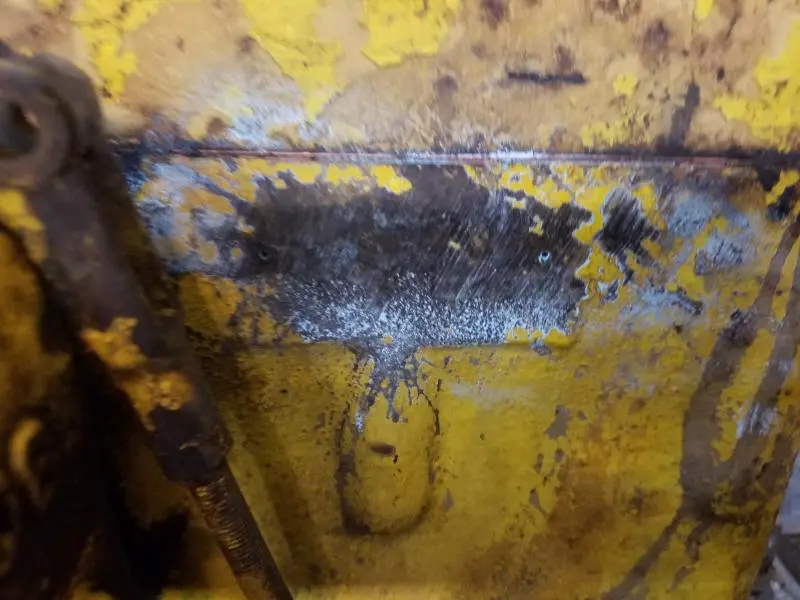
Sorry for any confusion I know it's a 5j but don't have a serial number to place it in a specific number series.
Old magnet and old iron habit thanks for the tip on the sump flange but no luck there.
I have a serviemans book which covers both the j and u models with notation for early tractor or late tractor if something is different. I know the parts book cover 5jxxx to 5jxxxx. Maybe all I need is a 5j parts book ? I'm just trying to get in the right range so I can order the correct parts.[attachment=43028]20170615_142845.jpg[/attachment]
I tried rubbing chalk on the serial number location but there just isn't anything left
Have a look on either the block or sump for a short series of letters and you can then date the actual day those parts were made based on the Cat foundry NUMERALCOD code, come back with what you find.
Mike
Hi Team,
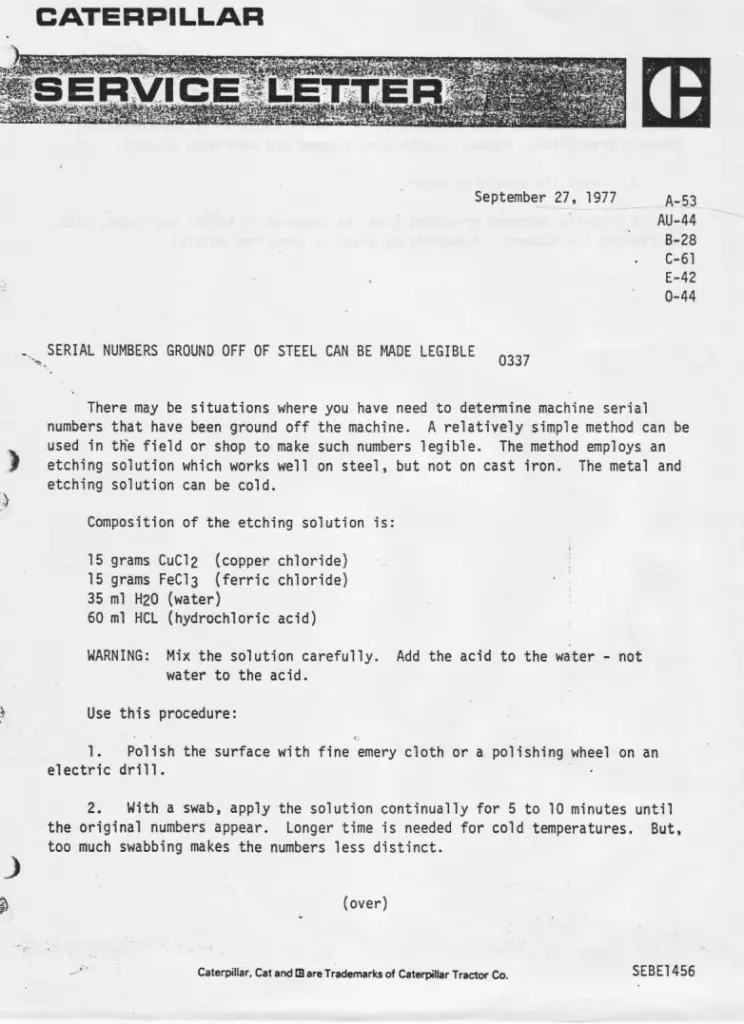
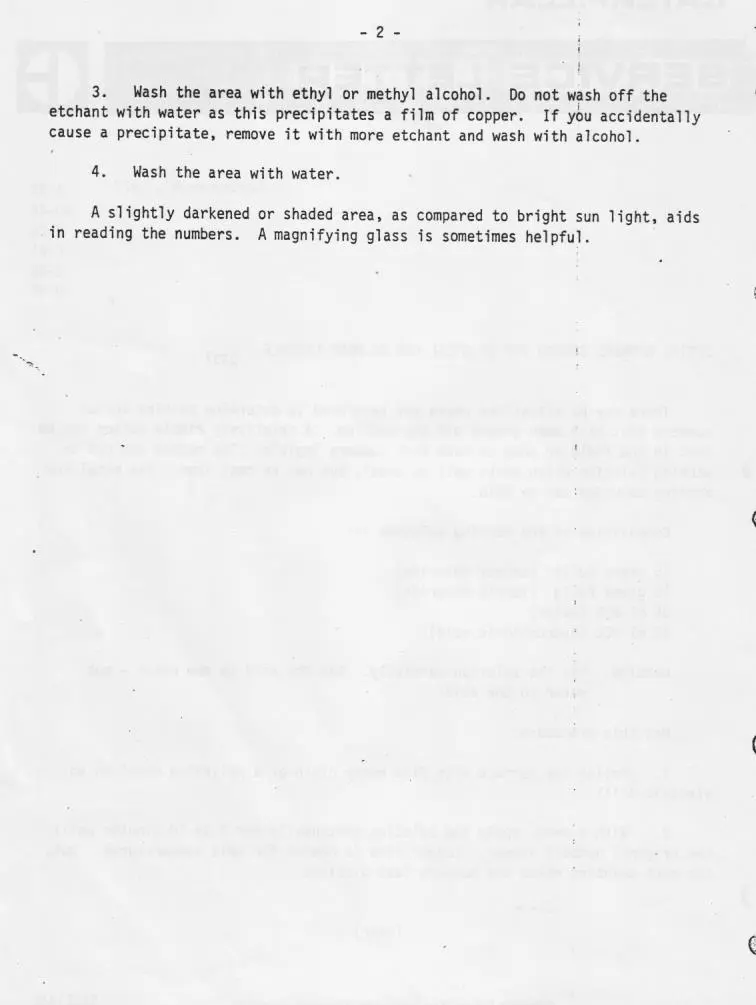
a Service Letter from around 1977 covered this subject.
Follow the directions implicitly and be sure to use all necessary safety precautions when handling acids etc.
If there was ever a Serial Number stamped into the areas beneath the tag this should help you locate something there.
As a Dealer Apprentice back in the early 1960's I had the job stamping the S/No's and or block numbers into the sump rails of machines that had missed it during assembly.
If the cyl. block was a "new part" replacement it may not have been stamped as part of the replacement process--we used to stamp at the plate area and refit the old plate from the replaced block--if it had one.
If it did not, it was a real rigamarole to get a replacement plate from Cat, and rightly so as fraud, shady dealings, etc. comes to mind.
Hope this helps,
Cheers,
Eddie B.
Hmmm!. Says it doesn't work on cast iron.
Have a look on either the block or sump for a short series of letters and you can then date the actual day those parts were made based on the Cat foundry NUMERALCOD code, come back with what you find.
Mike
[quote="Mike Meyer"]Have a look on either the block or sump for a short series of letters and you can then date the actual day those parts were made based on the Cat foundry NUMERALCOD code, come back with what you find.
Mike[/quote]
Here's what I found for letter codes on my tractor.
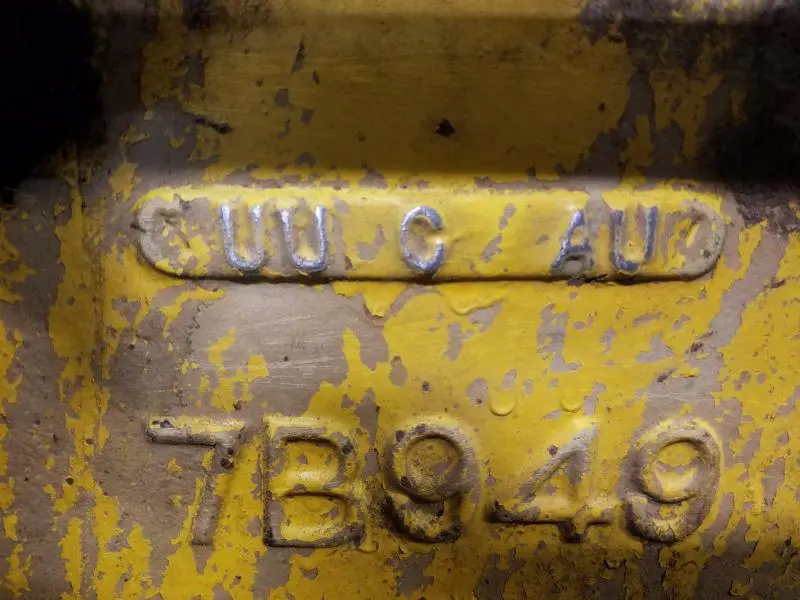
Engine UU C AU
Trans housing UU UD RU
Bellhousing UU EU RU
I found information on caterpillar NUMERALKOD and was able to cipher the trans and bellhousing as follows.
N= 0
U= 1
M=2
E= 3
R= 4
A= 5
L= 6
K= 7
O= 8
D= 9
UU UD RU TRANS
11 19 41
UU EU RU BELLHOUSING
11 31 41
UU C AU ENGINE
11 ? 51
[attachment=43049]20170616_121421.jpg[/attachment]
The engine code has me stumped. I couldn't find any reference to a C in the NUMERALKOD information. Is it possible this is a 51 block with an early head on it?
So it looks like the trans housing and bellhousing were cast in November 1941. I read that the bigger castings were seasoned for 6 months prior to assembly, so that would put assembly around early to mid 1942.
I went to Chriscomachinery for the serial numbers and he has 1942 listed as 5J5148 to 5J6158. There doesn't appear that any D2 tractors were made in 1943.
I have found two different parts books listed for 5J, one is 5J3501- up the other is 5J3501-10561.
So I should be safe with one of these parts books.
Still curious about the engine code if anyone can shed some light on that one.
As always thanks for the help and knowledge.
Thanks Mike for pointing me in the right direction.


Our channel highlights machines from the earliest Holt and Best track-type tractors, equipment from the start of Caterpillar in 1925, up to units built in the mid-1960s.
Chapter Nineteen
| Wheatlands Warracknabeal Agricultural Museum 34 Henty Highway, Warracknabeal 3393Chapter Nineteen
| 1234 Carngham - Lake Goldsmith Road Lake Goldsmith VIC 3373Chapter Two
| Folds Farm, Godshillwood, Fordingbridge, Hampshire, SP6 2LU
Antique Caterpillar
Machinery Owners Club
1115 Madison St NE # 1117
Salem, OR 97301
Terms & Privacy
Website developed by
AdCo
"I became a member recently because the wealth of knowledge here is priceless."
-Chris R