

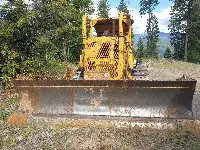
I installed a rebuilt carb a few engine hours ago and enjoyed have the pony motor start right up. I run the carb dry to stop it every time. Came back this winter and it wanted to flood. Took the carb off and inspected the float valve operation. Float height was 1.185". Found some grit on the inlet side of the float seat and cleaned it. Installed steel needle valve and checked that it would drop out of the seat and follow the float movement. It didn't, so I replaced it with a new viton tipped needle and brass seat. It started and ran a few minutes but after shutting it off it still flooded just sitting there. Adjusted the float to lower the fuel level slightly. Flooding stopped while sitting but wouldn't start. Curious why
Also, the spark seems weak at the plugs.
Hi TOP,
seems you may have debris coming from the pony fuel tank, suggest you fit a in-line filter to stop the float being held open or sticking and so not opening. Reset float level to spec.
Suggest you check for points gap (0.015") and cleanliness of the magneto points, cap and rotor for carbon dust, spark plugs for correct gap, I usually run a few thou. less than spec. (0.024") around 0.020" for best results with old magnetos, saves stressing the old coils so much.
Cheers,
Eddie B.
For most of the half century of working on Cats and old tractors I have avoided the use of inline fuel filters particularly the old metal type thinking they are to be used for systems with fuel pumps. Lately I started using the little plastic ones for ATVs which are gravity systems. You can see through them and they should filter adequately. You can buy a dozen on Amazon for very little money.
Hi Top, my buddy Mark has an HT4 and the pony has a Wico magneto on it. That magneto has a rotor magnet and we found that it took a lot of rpm for the magneto to fire. I happened across some videos about remagnetizing magnets, including magneto magnets, and saw that the folks were getting much better results from their magnets after remagnetizing. So, I bought a couple of neodymium magnets from the web and took a shot at remagnetizing the rotor. After reassembly, the magneto now produces a spark at a much lower rpm. Unfortunately I don't have actual metrics for you because I didn't think to measure the before and after rpm but subjectively I can tell it's much lower now, to the point where it's hard for me to hold the drill driver trigger slow enough when bench-testing. The testing is with the spark plug gap set to 020 and the points gap to the prescribed 015.
So you could check what rpm you mag sparks at, and I'll measure what our does now, after remagnetizing, and if there's a significant difference, that might be one explanation for your weak spark. (Other things are poor connections, failing coil, bad/incorrect plug wires, bad plugs, etc.)
On the subject of magneto design, I think the rotor magnet design has a shortcoming in that there is not much magnetic mass in a rotor magnet compared to a horseshoe magnet design such as an Eisemann. I suspect it's easier for a small mass rotor magnet to lose magnetism than a much larger horseshoe magnet. It's also harder to remagnetise rotor magnets just because it requires a fitment between the remagnetizing poles, rather than on top of them.
Just some thoughts for your day : )
Hi TOP,
seems you may have debris coming from the pony fuel tank, suggest you fit a in-line filter to stop the float being held open or sticking and so not opening. Reset float level to spec.
Suggest you check for points gap (0.015") and cleanliness of the magneto points, cap and rotor for carbon dust, spark plugs for correct gap, I usually run a few thou. less than spec. (0.024") around 0.020" for best results with old magnetos, saves stressing the old coils so much.
Cheers,
Eddie B.
Hi guys and thanks for the insights. The problem is now resolved but I will comment on EddieB and includes some others.
For the carb settings I will put the float back closer to what it was. It was running a little lean which for this one start probably cleaned a lot of junk out of the heads that had accumulated from running badly for quite a while.
As for the inline filter I had one right before the carb. It was the metal variety and it seems it was the source of the problem as I saw a lot of rust spots had formed in the outlet side of the filter. I wasn't in a position to replace it just yet, but I did hit is with carb cleaner and blow it out. The particles I found on the float valve seat matched what I would have expected from the metal inline filter. All this to say I will switch to plastic at the next chance to get into town. So 83 I think you are right on about that.
Now on to the magneto. This is not the pony that came with the D7 as it has a side crank, but the tractor was originally top crank. Somebody cut off the support for that and I patched the hole in the hood. So the magneto that was problematic was a Caterpillar branded item. I am not very familiar with magnetos so when I had it out I didn't realize what should have been obvious. The impulse coupling wasn't doing anything. I hit the points with a little emery and the spark then became non existent. Time to think of other solutions. I remembered I had purchased a good running pony last summer and wondered. Yes it had a Wico and good wires. I pulled it, checked rotation and fit up and firing order. All seemed right. I put it in the tractor and tested it no spark. Hit the points with emery, cleaned them and checked the gap. Perfect. In the vice I tested it and that is were I learned the Caterpillar impulse coupling wasn't working. No wonder I had anemic spark from that. The Wico was shooting a nice fat 1/4" spark in daytime just by turning the impulse coupling over in the vise. So I put it back and wouldn't you know it fired up first crank just like LAOL's pony motors do.
So the Caterpillar magneto had a bad impulse coupling, point issues, the cap and rotor were marginal even after I dried out the condensation that originally was making it erratic. I suppose I need to get it reworked, but that is for another day. The D7 got going and I was able to plow the snow that blocked my 1/4 mile driveway. Oh how I hate cleaning mud out of tracks.
Thanks for the responses. Any ideas about the Caterpillar magneto and I'm all ears.
Hi TOP,
oldcroak magneto has service books for most Cat and other brand magnetos that may be of help sometime.
https://oldcroak.com/magneto-rx-1/
Cheers,
Eddie B.
Hi TOP,
oldcroak magneto has service books for most Cat and other brand magnetos that may be of help sometime.
https://oldcroak.com/magneto-rx-1/
Cheers,
Eddie B.
Nice website. I didn't see Caterpillar branded units. Seem to remember they were Eisman but I am no expert. Thanks, that will be invaluable.
========
On closer inspection of the nameplate photo it was a Bosch magneto.
Hi TOP,
seems you may have debris coming from the pony fuel tank, suggest you fit a in-line filter to stop the float being held open or sticking and so not opening. Reset float level to spec.
Suggest you check for points gap (0.015") and cleanliness of the magneto points, cap and rotor for carbon dust, spark plugs for correct gap, I usually run a few thou. less than spec. (0.024") around 0.020" for best results with old magnetos, saves stressing the old coils so much.
Cheers,
Eddie B.
Tank debris was the first issue I had to deal with when I bought it. It was rusty but no leaks. Outlet fitting jammed with rust. So I removed the tank and gave it the gravel shake treatment then muriatic acid (boy was that filthy when it cam out, then I coated it with a liner. So presently fuel tank rust is a think of the past as long as I buy clean fuel and keep it clean. No, this was rust that actually formed in the metal inline filter.
Old D7s take time to get to know, but it is worth it.
Excellent work TOP, and thanks for reporting back. Makes sense about the impulse. Part of why I mentioned the magnetic strength is because the D2/D4 magneto does not have an impulse drive, so cranking speed then becomes a critical factor. With a 6v starter motor and batteries that may not be in tip-top shape from daily running, it's pretty easy for the cranking speed to drop off and when that's coupled with a weak rotor, starting becomes very difficult. But I'm glad to hear yours was a (relatively) easy fix, albeit a bit harder to diagnose. Yes on the undercarriage cleaning but it's important to do - I don't often hear of folks doing that (or on excavators), especially the youtubers so it's great to hear someone mention track cleaning from time to time.
Neil, my pair are not allowed in the shed with out a wash or a serious garden blower attack, lucky im in top quality hungary sand country that almost will bog a camel, I did have to do some loving to the mag on my D4 6U when I got it, points required clean up with emery tape and condenser wire joins were loose also.
Excellent work TOP, and thanks for reporting back. Makes sense about the impulse. Part of why I mentioned the magnetic strength is because the D2/D4 magneto does not have an impulse drive, so cranking speed then becomes a critical factor. With a 6v starter motor and batteries that may not be in tip-top shape from daily running, it's pretty easy for the cranking speed to drop off and when that's coupled with a weak rotor, starting becomes very difficult. But I'm glad to hear yours was a (relatively) easy fix, albeit a bit harder to diagnose. Yes on the undercarriage cleaning but it's important to do - I don't often hear of folks doing that (or on excavators), especially the youtubers so it's great to hear someone mention track cleaning from time to time.
Mud shucking was drilled into me from when I started in 6th grade. :P


Our channel highlights machines from the earliest Holt and Best track-type tractors, equipment from the start of Caterpillar in 1925, up to units built in the mid-1960s.
Chapter Eighteen
| Kingaroy, Queensland
Antique Caterpillar
Machinery Owners Club
1115 Madison St NE # 1117
Salem, OR 97301
Terms & Privacy
Website developed by
AdCo
"I became a member recently because the wealth of knowledge here is priceless."
-Chris R