

Diverter valve could be leak down source...bypass it to check.
If it was the control valve in the tank, I would expect both cylinders to leak down.
Thanks Old Magnet.... That's what I was thinking about the valve, it should affect both cylinders (According to my limitied knowledge). I was told to raise blade all the way, then switch over diverter valve and see if it falls...
I'm starting to really wonder if shop fixed it correctly or not....
Hi Gruberguy,
I am some what confused as to how the left cylinder can leak down as you describe.
If the cylinder/blade/"C" frame is a Cat unit there would have to be a lot of looseness in the joints for this to occur without the right cylinder being affected.
On the Cat system both cylinders are linked mechanically and hydraulically so that the track frames can rise and fall.
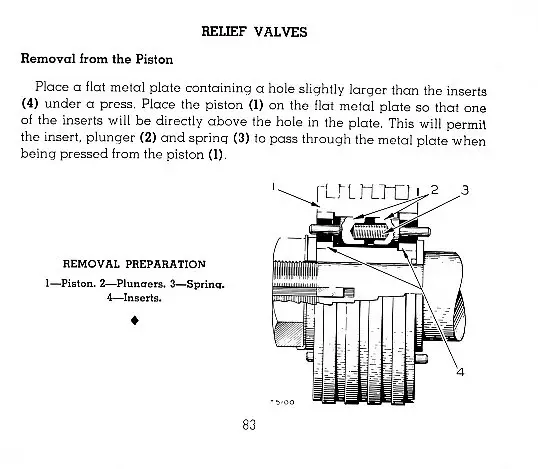
As this happens oil transfers from one Cyl. to the other. Be aware there are travel relief valves set into the pistons of the Cat cylinders. These are there to limit the cylinder travel up or down so no hydraulic over pressures occur in the cylinders/system.
.
These can leak and cause internal leakage in the cylinder.
If the cylinders are not mechanically connected to anything--blade/ C frame--then one Cyl. can leak down if it moves more easily compared to the other.
When you try and raise or lower mechanically unconnected cylinders the one that moves easiest will move until the travel reliefs in the piston open and that Cyl. will stop moving. Believe it or not the other cylinder will not move as the oil then circulates back to tank via the piston travel relief valves of the bottomed/topped out cylinder.
Is this what you are seeing?
I have attached a scan of a typical piston valve setup. Some units can have them built into the Cyl. rod end.
Hope this makes some sense.
Cheers,
Eddie B.
You'll have to pardon my limited hydraulic knowledge here, but I will ask around the shop (work on military base) with the guys who know WAY more than I on the subject of the valves.... My dozer does have some play here and there in the linkages, nothing that I consider major, but I could be wrong. It is a standard Cat setup, I forget the blade serial number now though....
What is happening is the left (drivers side) cylinder is bleeding off while the other side isn't. If I raise blade fully, cylinder comes out anywhere from 6-9", while right side doesn't. Makes my blade dig 6-9" deeper on the side. But, cylinder doesn't do so if fully down. It'll raise front of dozer, and never bleed off....
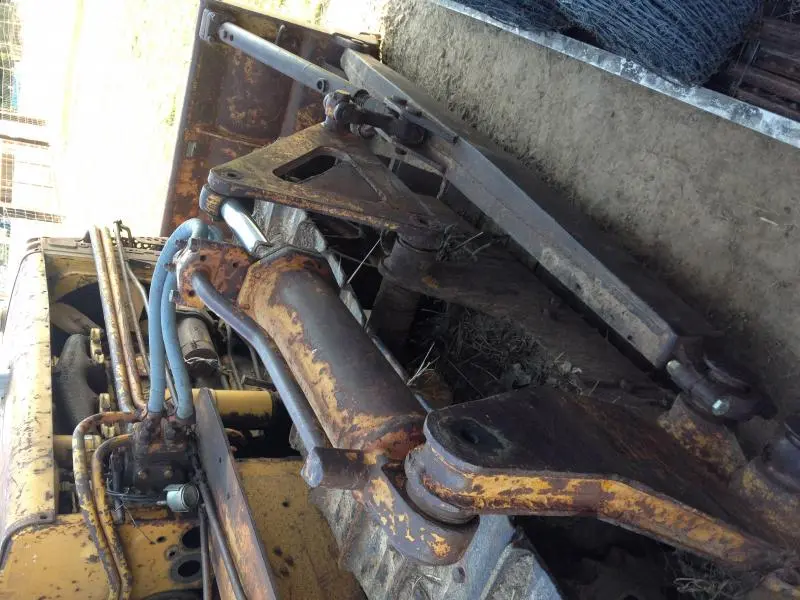
Here is older pic I have on this pc of my dozer....[attachment=26287]dozer.jpg[/attachment]



Our channel highlights machines from the earliest Holt and Best track-type tractors, equipment from the start of Caterpillar in 1925, up to units built in the mid-1960s.
Antique Caterpillar
Machinery Owners Club
1115 Madison St NE # 1117
Salem, OR 97301
Terms & Privacy
Website developed by
AdCo
"I became a member recently because the wealth of knowledge here is priceless."
-Chris R