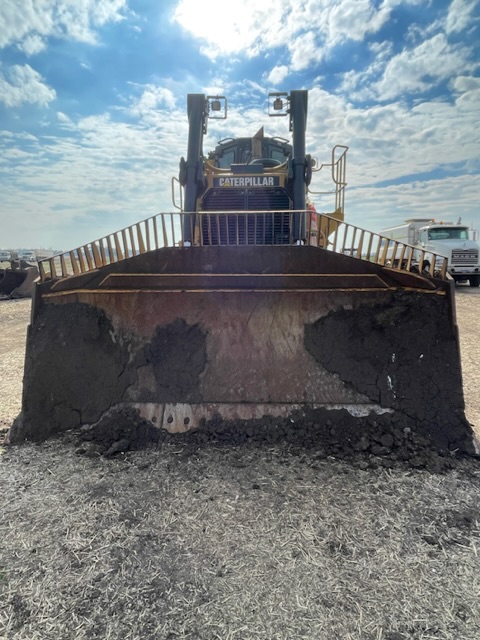

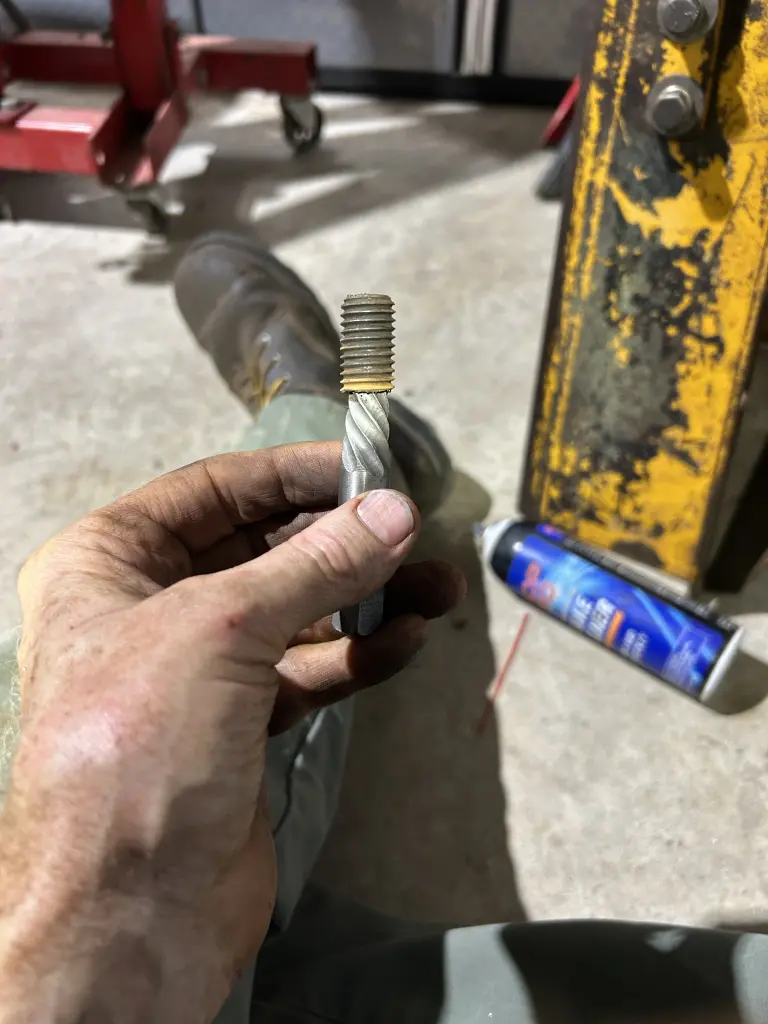
I'm working on a 1967 dozer and it's giving me fits with broken bolts. Spent way too long today drilling out and removing a 5/8" bolt with an easy out. I'll have more of the same tomorrow.
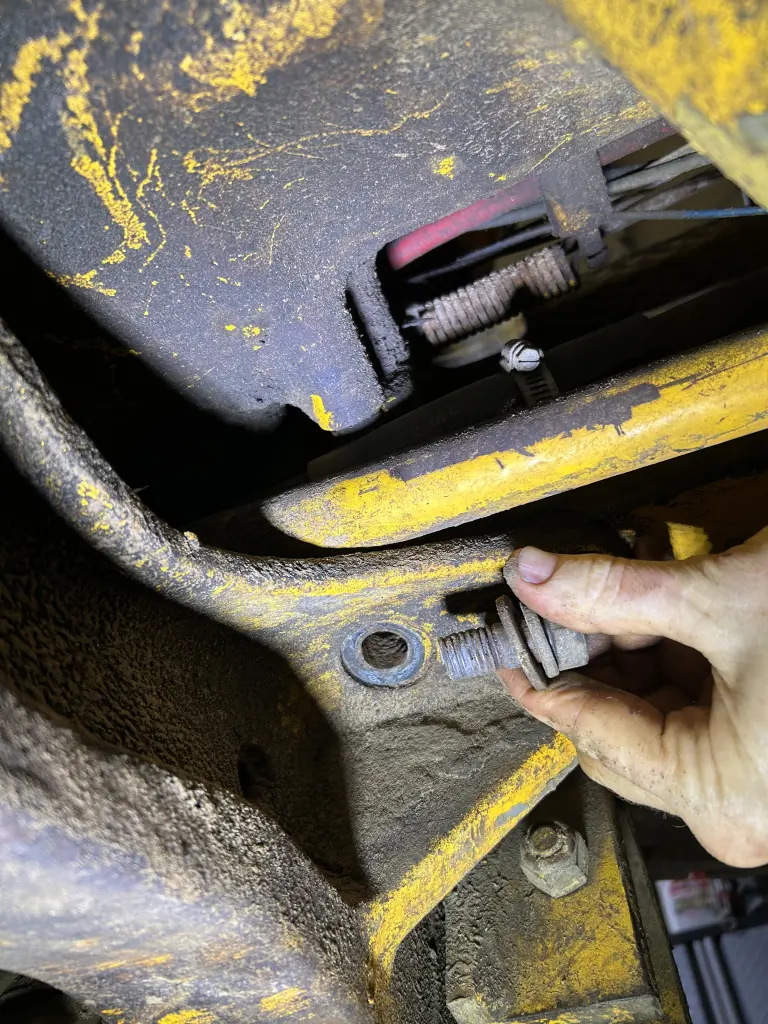
So, curious to hear what y'all are using on bolts and where. I'm not worried about engine stuff, but what about larger bolts that hold the machine together? Stuff on crossmembers, draw bar mounts, holding the ROPS on, etc. I'm not familiar with Stockholm tar, but it's said to be an anti-size and thread locker, too. Sounds interesting.
Thanks
Scott
I have never used Loctite or anti seize on bolts holding transmissions together or ROPS or that kind of stuff. I Loctite every single bolt on a linkage mower or mower conditioner because of vibration. Loctite flywheel bolts or use it where bolts continue coming loose. I have seen mechanics use anti seize on loader bolts which i think helps them come loose. It depends on what you feel and what you want to do. I would rather have trouble undoing a bolt than have it work loose and cause a failure.
Hi, bulletpruf.
I was introduced to Stockholm tar about 40 years ago by a company who swore by it. They were using it on bottom track roller bolts onna Hanomag dozer. I didn't last long enough there to discover whether it worked or not 'cos I found that they were paying some funny 'Pakistani' rate of pay and so we parted ways - and I eventually got what I should have been paid too.
As I understand it, Loctite, et al, FILL the spaces around the bolt with their epoxy compound leaving no room for the bolt to move along with their adhesive qualities. As it was explained to me, Stockholm tar has the adhesive qualities along with the corrosion prevention but still allows the bolt to move slightly within the threads in the hole or nut.
Sounds strange but that is how it was explained to me.
Just my 0.02.
You have a wonderful day. Best wishes. Deas Plant.
Hi, bulletpruf.
Still on broken bolts, if you have a welder handy and can get to the bolt. you might try welding a flat washer to the top of the bolt, then weld a nut to the bolt. Leave it to cool out and try to extract - you even add Kroil or similar after it has cooled and let that soak in for a while before attempting extraction. Apparently/ the heating and cooling from the welding also helps to break the bolt free.
I have done this trick with a couple of 1" bolts that were broken off DOWN the hole, in one case about 3/3 of an inch, by welding spring washers to the bolt until I got it up to surface level where I could weld a flat washer and nut to it. These were the retainer bolts for the head plate of a D9G track recoil cylinder so we weren't going to able to drill them with anything that we had 400 miles from the nearest town.
Just my 0.02.
You have a wonderful day. Best wishes. Deas Plant.
One of my work mates used to use Stockholm tar a lot. For memory i think Loctite was a bit better for bolts that had a habit of working loose all the time.
But i am searching around in the archives in the back of my brain box to remember this.
We used to work on New Holland mowers and big square and round balers that had a habit of rattling things apart.
Hi, bulletpruf.
I was introduced to Stockholm tar about 40 years ago by a company who swore by it. They were using it on bottom track roller bolts onna Hanomag dozer. I didn't last long enough there to discover whether it worked or not 'cos I found that they were paying some funny 'Pakistani' rate of pay and so we parted ways - and I eventually got what I should have been paid too.
As I understand it, Loctite, et al, FILL the spaces around the bolt with their epoxy compound leaving no room for the bolt to move along with their adhesive qualities. As it was explained to me, Stockholm tar has the adhesive qualities along with the corrosion prevention but still allows the bolt to move slightly within the threads in the hole or nut.
Sounds strange but that is how it was explained to me.
Just my 0.02.
Hi Deas Plant -
The Stockholm tar does sound very intriguing to me, but I am not seeing much information on the interwebs. I will continue to research and I will report back if I find anything interesting.
Scott
I have never used Loctite or anti seize on bolts holding transmissions together or ROPS or that kind of stuff. I Loctite every single bolt on a linkage mower or mower conditioner because of vibration. Loctite flywheel bolts or use it where bolts continue coming loose. I have seen mechanics use anti seize on loader bolts which i think helps them come loose. It depends on what you feel and what you want to do. I would rather have trouble undoing a bolt than have it work loose and cause a failure.
That is how I generally approach it as well - sparing using of blue Loctite for a bolt that's likely to work loose. I typically only use antiseize if recommended by a manufacturer.
Thanks
Hi, bulletpruf.
Still on broken bolts, if you have a welder handy and can get to the bolt. you might try welding a flat washer to the top of the bolt, then weld a nut to the bolt. Leave it to cool out and try to extract - you even add Kroil or similar after it has cooled and let that soak in for a while before attempting extraction. Apparently/ the heating and cooling from the welding also helps to break the bolt free.
I have done this trick with a couple of 1" bolts that were broken off DOWN the hole, in one case about 3/3 of an inch, by welding spring washers to the bolt until I got it up to surface level where I could weld a flat washer and nut to it. These were the retainer bolts for the head plate of a D9G track recoil cylinder so we weren't going to able to drill them with anything that we had 400 miles from the nearest town.
Just my 0.02.
Hi Deas Plant -
Yes, this is a method that I am quite familiar with. I actually filmed a YouTube video on it recently after a broke off the crankshaft balancer bolt for my AMC Javelin race car. https://www.youtube.com/watch?v=e8X_hA9hJCY
The bolt that I am trying to remove now is recessed about 1.5 inches in the hole, so I will likely weld a 2 inch piece of pipe to the bolt and then try to turn the welded pipe with a pipe wrench.
Thanks for the input.
Scott
One of my work mates used to use Stockholm tar a lot. For memory i think Loctite was a bit better for bolts that had a habit of working loose all the time.
But i am searching around in the archives in the back of my brain box to remember this.
We used to work on New Holland mowers and big square and round balers that had a habit of rattling things apart.
Please let me know if you run across anything helpful.
Thanks
Scott
Hi Bulletpruf, sometimes if you use left hand drill bits as they break thru the end of bolt/stud they jam as such and sometimes will reverse the broken part out of the hole, makes a quicker easier extraction, saves using the easy out, make sure using correct drill bit so you have some meat to try the easy out or keep drilling until you can pull thread out (provided very central to broken bolt) it will look like machining swarf, use penetrant oil
Left hand twist drill is an excellent idea and has been used effectively by many. One thing to keep in mind - locating and drilling in the center is critical if you want to retain the threads accurately. Hard bolts are difficult to drill, special grinding techniques of the drill bit helps. There is one advantage to Carbon Steel Taps and Carbon Steel Bits - mild acids will tend to eat the Carbon Steel and are sometimes very effective ways of removing the broken bit or taps. The acids do not work on HIGH SPEED STEELS. Coca-cola, and like carbonated drinks sometimes help with removal of broken Carbon Steel taps and bits, given some time to work. -- cts


Our channel highlights machines from the earliest Holt and Best track-type tractors, equipment from the start of Caterpillar in 1925, up to units built in the mid-1960s.
Antique Caterpillar
Machinery Owners Club
1115 Madison St NE # 1117
Salem, OR 97301
Terms & Privacy
Website developed by
AdCo
"I also joined a year ago. had been on here a couple of times as a non-member and found the info very helpful so I got a one year subscription (not very expensive at all) to try it out. I really like all the resources on here so I just got a three year. I think its a very small price for what you can get out of this site."
-Jason N