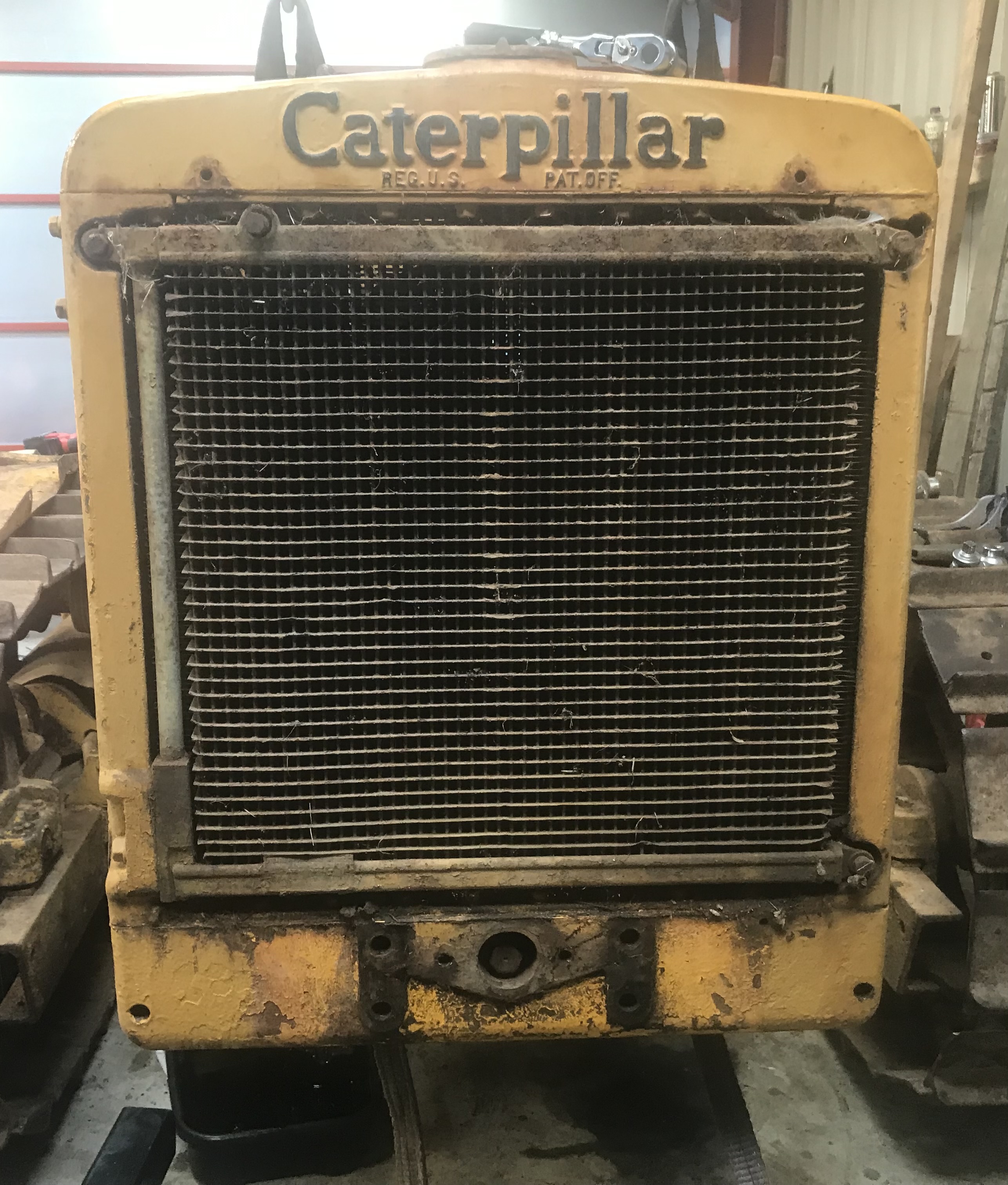
-Neil thank you for the useful info.on the D2.D4 Carbuerators,is there a printout on the needle valve adjustments that could be sent to us as this is for a friend
The definitive guide to the D2/D4 pony carbs is by Squatch253 on YouTube. Search Squatch253 carburetor there and you’ll see he has a whole series. It’s a goldmine of info, as is all his content for any Caterpillar restorer.
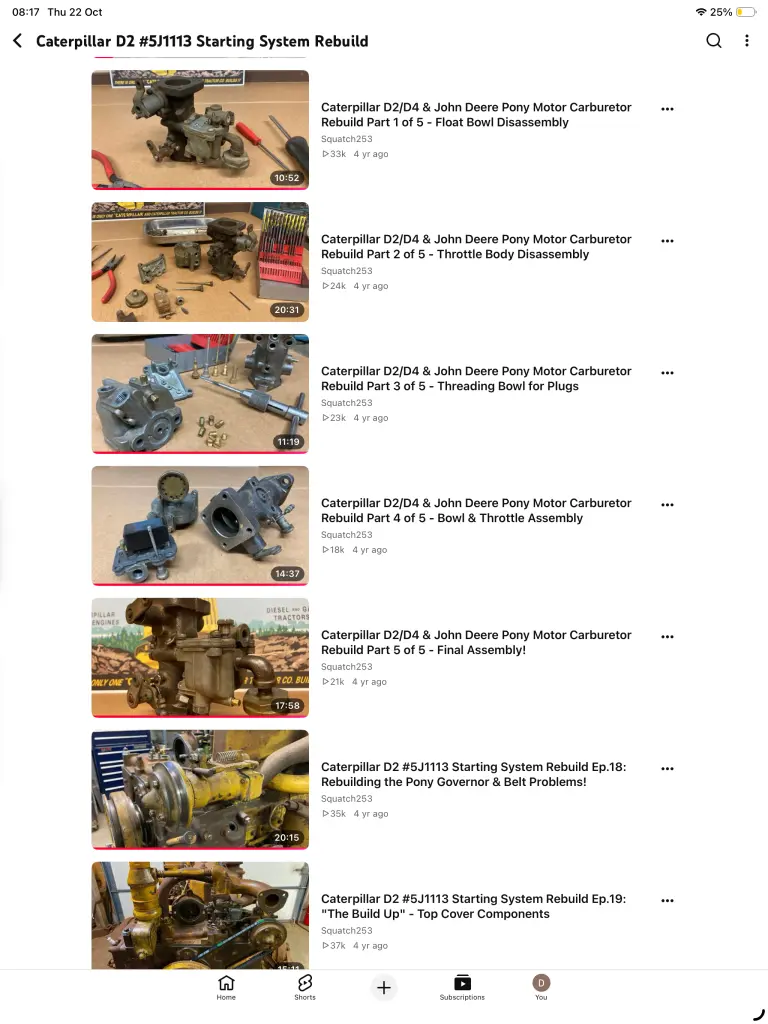
Also grab the TU-4C parts catalog and the instruction guide from Zenith who are the carburettor's manufacturer. The docs that I'll send include the float level settings, and for the idle jet adjusting screw, the initial setting is lightly tighten to the seat then back out one turn per Zenith while the Cat instructions state half a turn. Opening this screw leans the idle mixture. For the main jet, Zenith literature I have doesn't state an initial setting but Cat's literature starts with one turn, however it depends on whether you have the bell-crank carb or the direct jet version. You can tell the difference because the former has a horizontal adjusting screw that enters a small housing on top of the bowl cover, while the latter has a vertical knob that is part of the needle. For the latter, screw it down lightly until it contacts the seat then back out a turn. For the former, it's a little more difficult to detect when the needle lifts off the seat but basically screw the adjuster out to let the needle seat, and then screw it in to lift it off the seat, again one turn. This version is a poor design with a very light right angle piece that is easily bent if the screw is adjusted in too tight so it's best to first confirm that the right angle piece is indeed 90 degrees. Once you've done that, you can proceed with adjustment. You can then adjust from there once the engine is warmed up. Apart from the specifications, I'd list these as the most important factors in having a good running and controllable carb:
drain the carb after use. It doesn't have to be on every start but definitely every day of use (fuel doesn't go off after a day)
use ethanol-free gas. It might cost a little more, but you use so little of it that the price really doesn't matter (which is saying something with today's gas prices...)
apart from blocked passages, incorrect settings, etc., one of the biggest contributors to poor starting/running is wear - worn/broken gaskets, worn throttle shaft/bushings that upset the carb's fluid dynamics, etc. But a not-well-known other factor is crankcase breathability. If the crankcase can't breathe properly, it can affect the carb to the point that a carb that is in good shape still won't start a pony. Taking the oil fill cap off can quickly identify this condition.
also know that 99% of carb problems come from the magneto and vice versa : ) A joke obviously but I like to always check that I have good spark before I dive into carb repair (and that means good spark under compression). Solid copper core plug wires, non-resistor plugs, and a magneto in good shape are a must in order to tune the carb correctly.
Private message me your email and I'll send over the Zenith literature I have (I'll send them to you too Tony to add to the library if we don't already have them)
Sounds good Neil! Thanks!


Our channel highlights machines from the earliest Holt and Best track-type tractors, equipment from the start of Caterpillar in 1925, up to units built in the mid-1960s.
Antique Caterpillar
Machinery Owners Club
1115 Madison St NE # 1117
Salem, OR 97301
Terms & Privacy
Website developed by
AdCo
"I also joined a year ago. had been on here a couple of times as a non-member and found the info very helpful so I got a one year subscription (not very expensive at all) to try it out. I really like all the resources on here so I just got a three year. I think its a very small price for what you can get out of this site."
-Jason N