

Hey all - I bought a ranch four years ago (and gave away a derelict 1951 Cat 212 to Offrdr here!) and with it came a 955H with a 4-in-1 bucket, backhoe attachment, and a sheeps foot compactor:
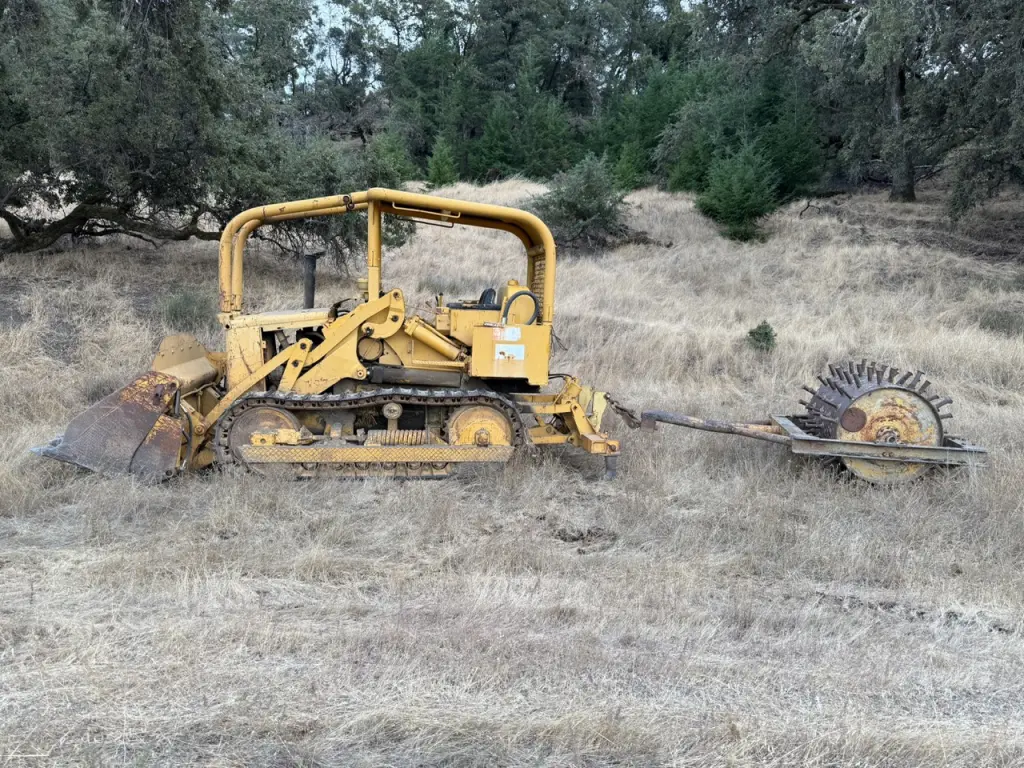
I've never operated heavy machinery before. Trying to steer it on the driveway intimidated me so it wasn't until this last weekend that I actually put it to work for about 5 hours; my 8-year old self is kicking my 50-year old self in the butt for not doing it sooner! I learned it just needs a lot more revs and more foot pressure and the thing actually turns pretty darn well! When it lifted up a 20' long tree trunk and cleared a road, I was sold. 🎉
I have a few questions that I'm hoping y'all can guide me on as I see more use in my future. I have the service manual and a little bit of automotive experience but I'm definitely a newbie.
Work that has already been done since I owned it:
Left side track wouldn't hold tension and seal was replaced by a mechanic.
I was letting the kids operate the bucket while parked and the bucket hydraulic line failed and showered everything in a 30 foot radius in hydraulic oil. All of the bucket hoses were replaced...
Transmission oil wasn't touching the dipstick so I put 5 gallons in last weekend and now I'm just a tad short of FULL.
Greased all the zerks I could find, engine oil and hydraulic fluids were topped off last weekend
Service Questions:
My biggest concern is that the right loader arms rubs on the right tracks. Not 100% of the time, but enough that sometimes there is even a big clang when I lower the bucket because it's hitting slightly on top of the right track as it comes down. I have a little video here of the play in the arms - is that within specs for operation? I'm not sure if the bucket arms are bent or the track is closer than it should be. How worried should I be? How can I verify which part is the problem and whether I can do anything about it?
I have a decent leak on the right clam cylinder that opens/closes the scoop part of the bucket. At full retract, some oil pours out the top and runs down the cylinder. I understand you can take off the plate and remove a shim to tighten it up and - hopefully - slow or stop the leak. Can anyone explain this process or point me to a video? I've tried searching YouTube but haven't found one that seems relevant to what I need to do on this machine.
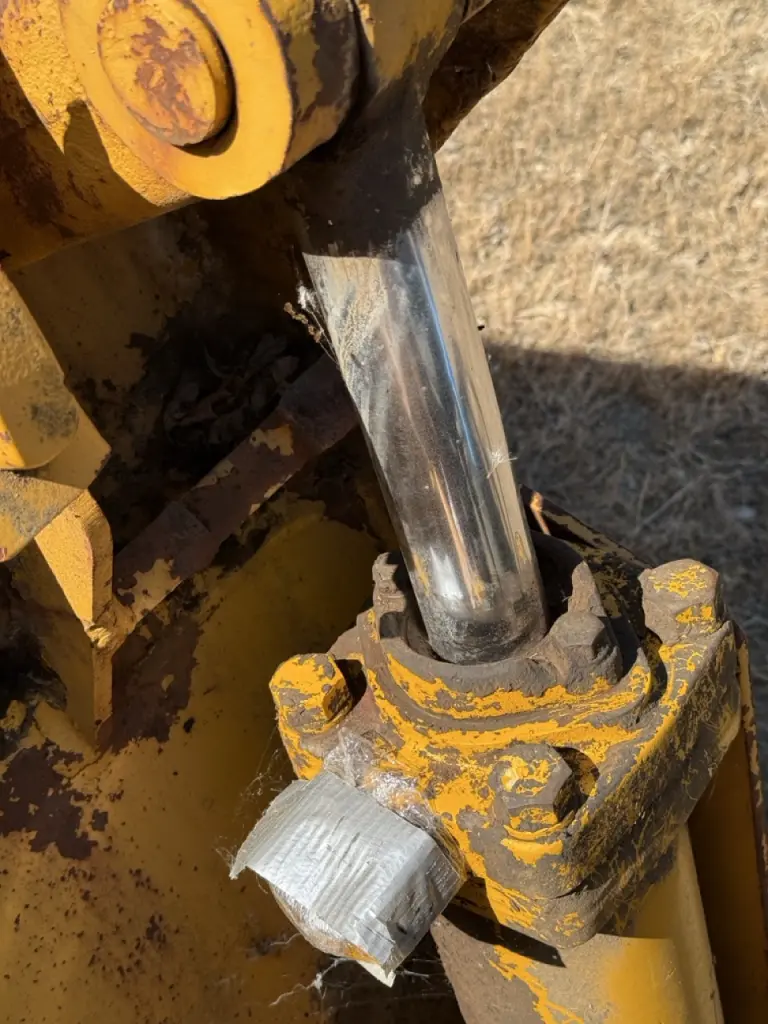
This weekend I noticed that my ripper cylinder has a leak. In contrast to the clam cylinder, this one looks straightforward to remove and service (or more precisely, take somewhere to be serviced). I'm not overly concerned with the leak size but I noticed the ripper is now falling down slowly under its own weight and I was almost driving with the ripper down unknowingly. Does this one have shims that can be pulled as well?
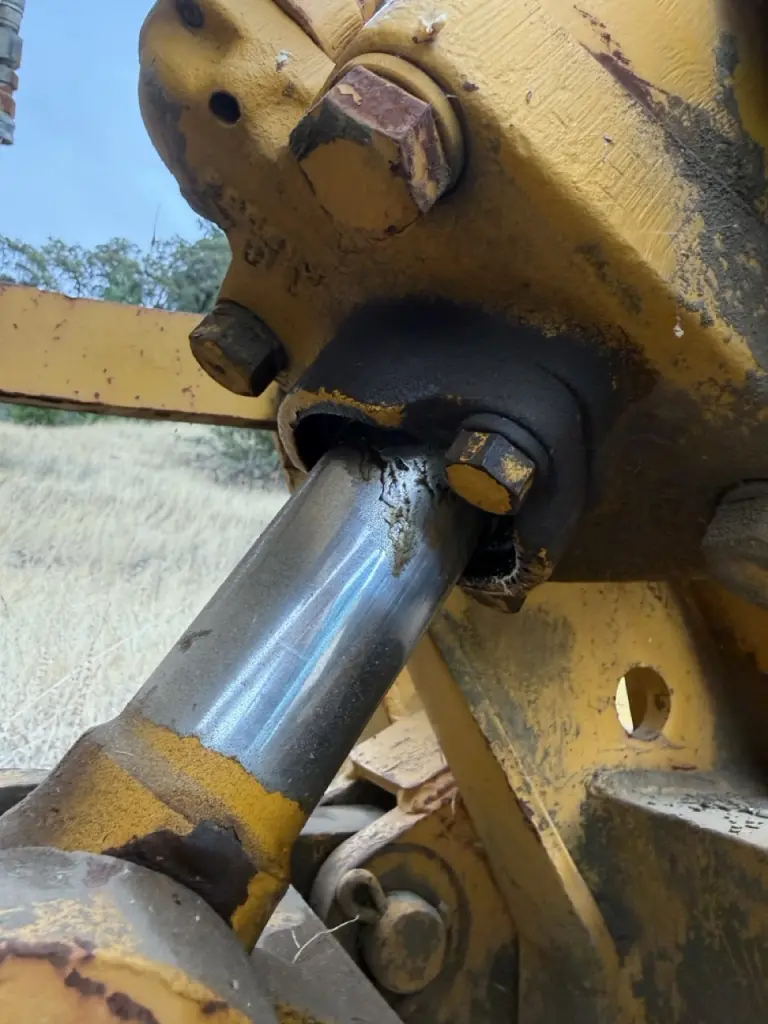
Steering with the pedals - there are times when pushing slightly gets it to turn (my understanding is this is only impacting the steering clutches?) and other times where I have to give it all I've got to get it to change direction. In my limited hours so far, it doesn't appear to correspond to how long the machine has been operating (e.g., not a cold/hot issue). Is this normal? I've seen how to adjust the brakes but not sure that's a potential issue here?
I'd like to get 2 more ripper teeth so I can tear shit up. 😂 Does anyone have any for sale they would part with here?
Where is the service meter on these machines? I looked under what I think is the final fuel filter and there is a service meter looking thing, but it's not angled like in the service manual and the place where the dials would be is blanked out?
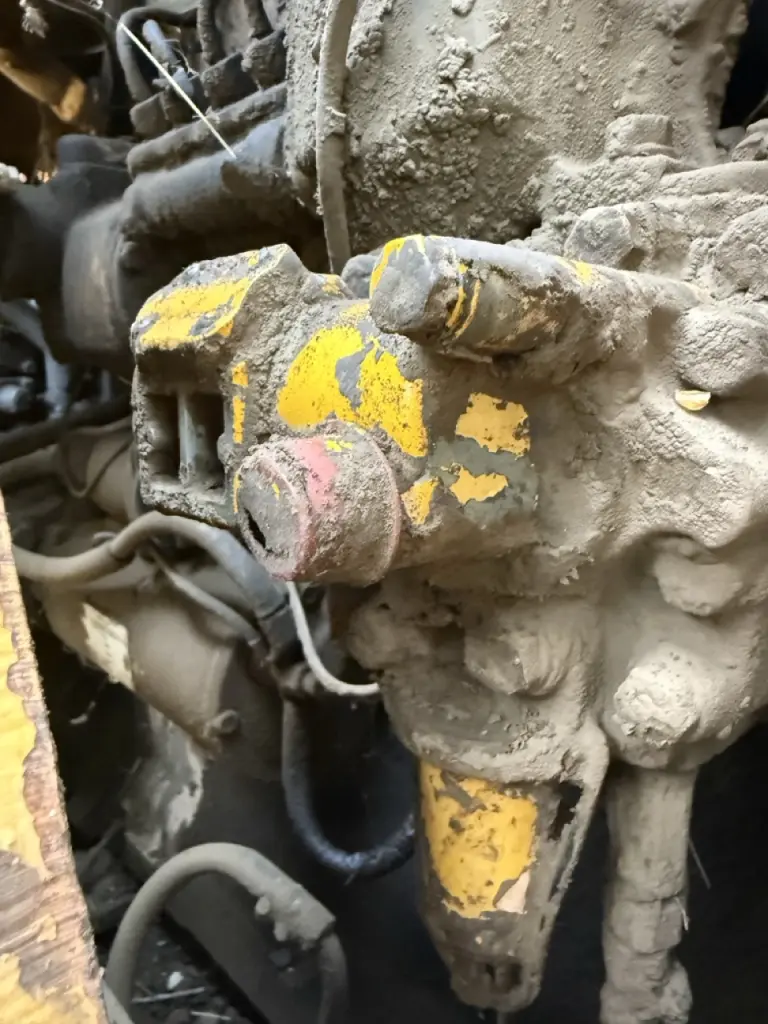
Adjusting track tension - my 1 - 1.5" track sag measurement seems to vary significantly whether I drive forward or backwards and where the tracks come to rest so measuring is difficult. Certain links also seem to be "sticky" or "stuck" so they don't always sit "flat". Any advice on not operating them too loose or too tight beyond the sag spec?
I read about using bucket pins to prevent the bucket from falling on your head while working under it. Do they look like any of these? What would the right dimensions be? Do you lower the bucket onto them proactively or is it there just in case it drops?
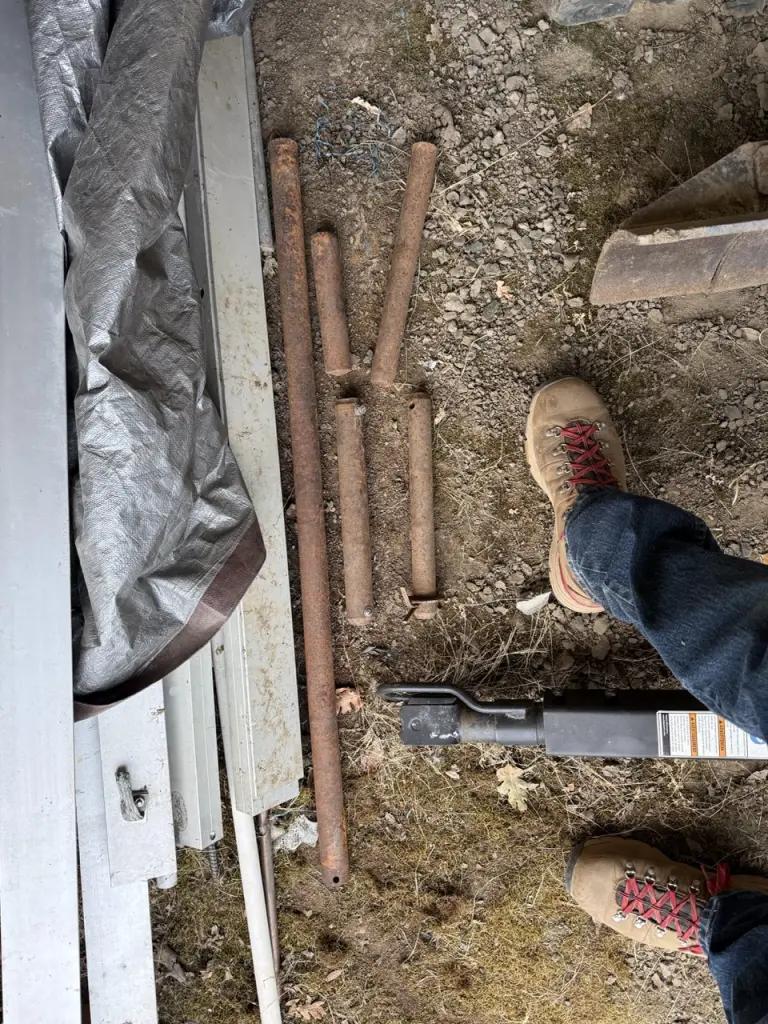
Operating Questions:
I did a decent job clearing a slip to restore road access and digging out a pond to raise the berm. It was my first time loading any material in the bucket. My technique was pretty bad. 45% of the time I had nothing in the bucket, 45% of the time the machine stalled out trying to scoop too much, and 10% of the time I had a full bucket. It's really hard to learn without being able to see the bucket. Any advice on how to learn? I know to use the angle indicator on the arms for how to start but I'm not sure on the technique of using the raise/lower and tilt functions to get a steady fill in dirt or gravel?
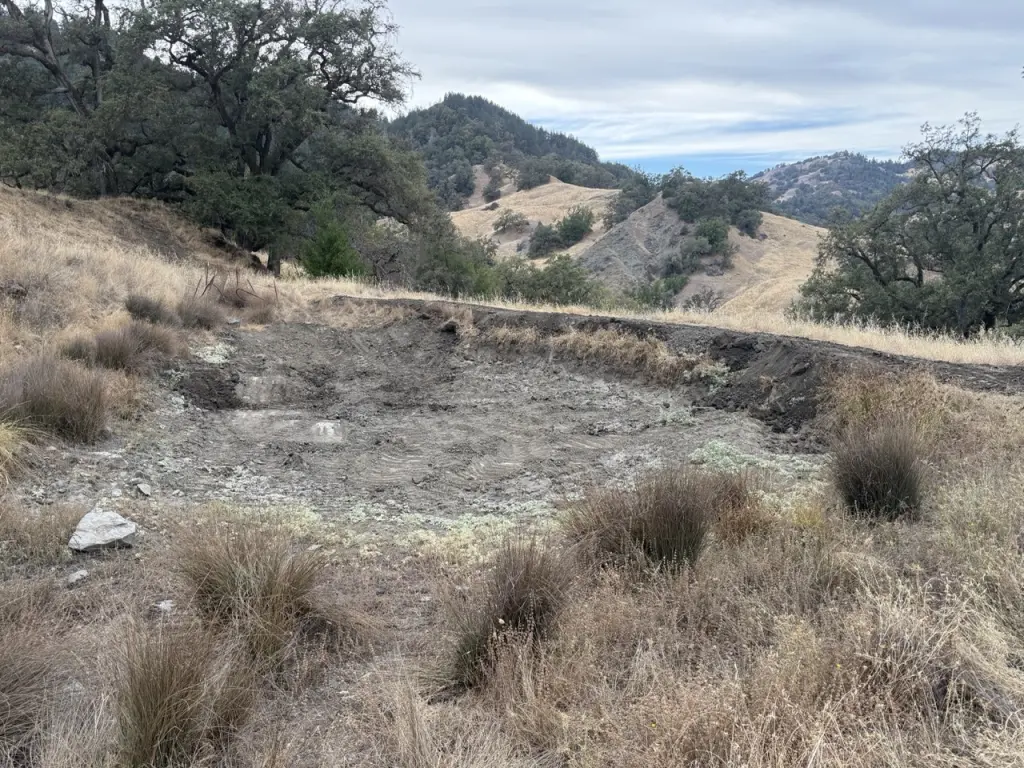
After pushing the trees out of the way and clearing the slip, I wanted to smooth things out so I tried dragging the bucket in reverse in float mode. Is this OK for the machine or standard procedure to do? Is there a better way to smooth out the ground?
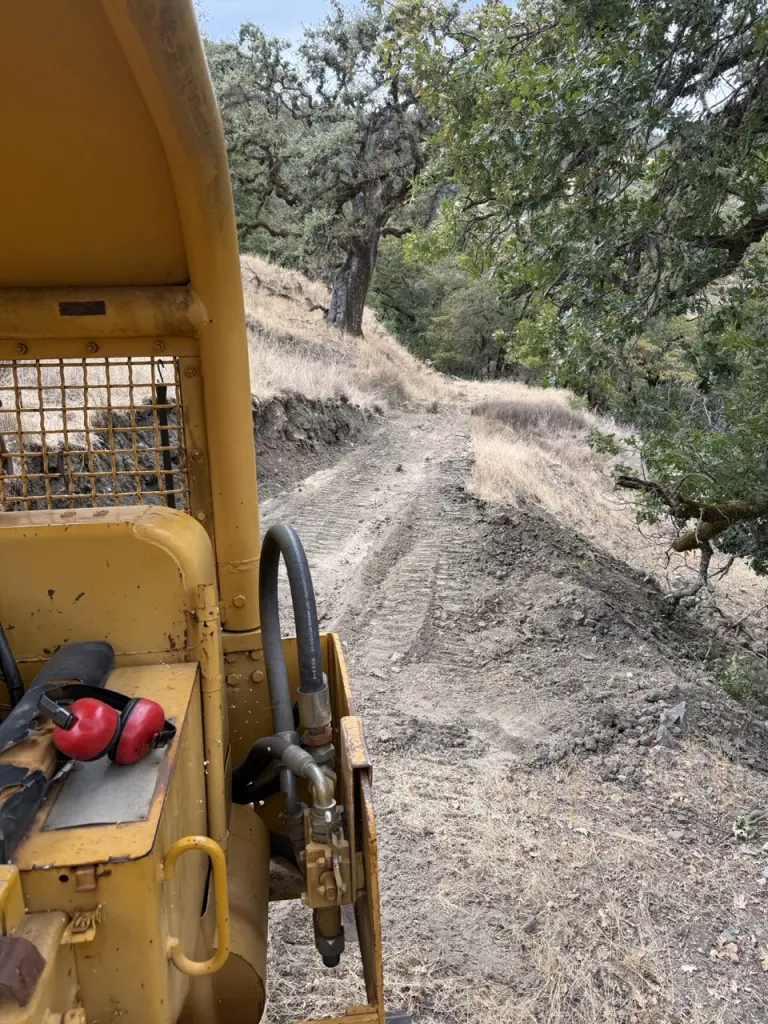
Thank you for your time and attention to helping me learn!
Hi and welcome to the forum. Consider joining the club, lots of benefits for you here. Let me address a couple of items - 1st, DO NOT TRUST HYDRUALICS or any other support system when attempting to work under a load! Usually - there is a method of putting a support between the cylinder and the rod end to support the weight and prevent the cylinder from collapsing (lowering). Sometimes looks like a piece of channel that fits over the cylinder rod. As far as loading the bucket - practice and feel along with the terrain and how hard the material you are digging into. Too much angle, the bucket will stall the machine, too little, it will skim over the load. The bucket has multiple uses and methods, very handy tool. Yes, back blading or dragging the bucket in float is common, pay attention to the position of the bucket for desired effects. Second caution - NEVER LEAVE THE MACHINE in GEAR and dismount! Lower all equipment, Bucket and rippers when parking or working on the machine (unless properly supported). Right track running into the loader arms is not normal operations - there is a cause somewhere, could be broken spring, bad idler bushings, arm bent, etc. I would caution you on pushing trees with forked limbs, they can catch and roll upward, then fall uncontrolled. Even with the ROPS (cage) you do not want that experience. Cylinder leaking is either the packing gland or the piston packing - depends upon leak down or leaking at the rod. Most often, requires replacing the packing (rings, etc). READ and UNDERSTAND the Safety Procedures in the Operator Manual specific to your machine. Know in advance how to handle un-forseen issues. - cts
Hi, brian.
The movement that you show in your video is NOT what is causing the contact with the track. Yes, there is wear there but not anywhere near enough to allow it to hit the track. I'd be looking at the front idler mounts and bearings.
The shims for adjusting the packing on that leaking ram are full circle shims - slide the cap up the ram shaft, lift a shim and cut it in ONE place to get it off the ram shaft and replace the cap - it'z by guess and gahhdamn/trial-n-error to find out how many shims you need to take out. One atta time is usually 'good fishing'. (The 1-cut trick, preferably with tin snips, on the shims allows for easy re-use if you ever have to replace the seals.)
Re the digging bit - machine stationary - put the bucket on the ground at roughly where you think had the bucket floor flat on the ground and put the lift lever in float. The move the bucket crowd control both ways alternately looking for the point where the the loader arms neither raise nor lower as the bucket tilts. At that point, the bucket floor will be flat on the ground. If you have a bucket level indicator, you can adjust it to indicate correctly. If you don't have a bucket level indicator, make SURE that your memory is switched ON and then store that image for future reference - or make a bucket level indicator.
When 'ackshully' digging from a bank or stockpile, approach the dig area with the bucket flat on the ground and push into the material until you JUST START to feel the load come on to the engine. Pull the hoist lever into 'Raise' and leave it there. Then work the crowd lever in small increments as the machine moves forward. This will allow the bucket to rise up the digging face bit by bit filling more as it rises. Practise (may) make perfect.
When digging from a bank or stockpile, don't put the bucket 'ackshully' ON the ground until just before you hit the digging face to minimize wear on the bucket floor - and teeth if fitted.
Any 1/2-way decent ground engaging tools supplier should be able to come with new ripper boots/teeth if you can take them a sample. If you have the make and model of the ripper, that MAY be enough.
Just my 0.02.
You have a wonderful day. Best wishes. Deas Plant.


Our channel highlights machines from the earliest Holt and Best track-type tractors, equipment from the start of Caterpillar in 1925, up to units built in the mid-1960s.
Antique Caterpillar
Machinery Owners Club
1115 Madison St NE # 1117
Salem, OR 97301
Terms & Privacy
Website developed by
AdCo
"I also joined a year ago. had been on here a couple of times as a non-member and found the info very helpful so I got a one year subscription (not very expensive at all) to try it out. I really like all the resources on here so I just got a three year. I think its a very small price for what you can get out of this site."
-Jason N